
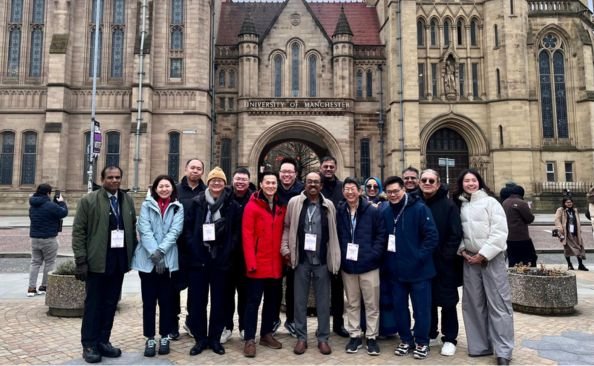
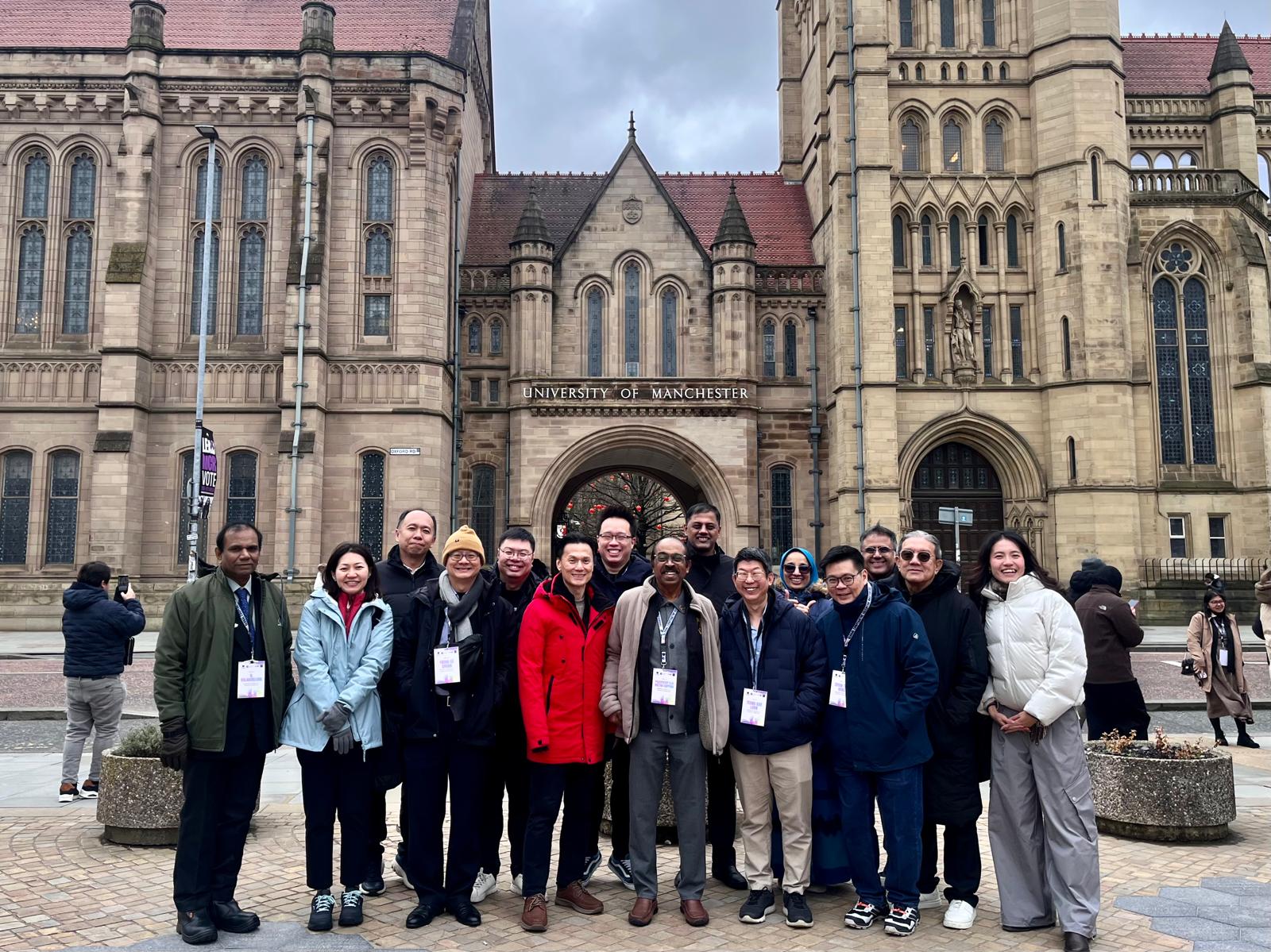
From 9 to 13 February 2026, the pioneer cohort of the Co-operative Leaders Programme (CLP) travelled to Manchester and Rochdale, United Kingdom (UK), for the Global Co-operative Executive Masterclass. 14 participants took part in the five-day immersive overseas masterclass, delivered in collaboration with the Co-operative College of the Philippines, with the Co-operative College UK serving as the training partner alongside UK industry experts.
Developed by the Singapore National Co-operative Federation under the Singapore Co-operative Movement 10-Year Transformation Roadmap, CLP aims to equip senior co-operative (co-op) leaders in shaping the future direction of their co-ops, contribute ideas at Movement-level discussions, and raise awareness of the co-op model locally and internationally. These are leaders who have been nominated and has had at least three to 10 years of leadership experience within the Singapore Co-operative Movement.
Reaffirming our Co-operative Identity
Situated in South Pennine foothills along the River Roch with a population of about 110,000, Rochdale is the birthplace of the modern co-operative movement. From learning from overseas co-operatives to building network, the CLP participants were the first to benefit from this exposure in Manchester.
Operating on the principles of self-help and mutual assistance, the strength of co-ops lies in its member for member approach to empower communities. In Singapore, co-ops are businesses with various social missions that help Singaporeans and residents by moderating the cost of living. This value proposition is something co-op leaders need to be cognisant of.
“In our shop, we sometimes forget that our members are actually the owners,” said Mr Yoong Ee Chuan from campus co-operative Ngee Ann Polytechnic Consumer Co-operative. “We need to stop just ‘selling to customers’ and start ‘serving our members’.”
Mr Matthew Chua from SASCO Home, a community programme of the Singapore Amalgamated Services Co-operative Organisation (SASCO), also noted that he is reminded to reconnect with principles that distinguish co-ops from conventional corporations, reaffirming that “democratic ownership, ethical practice, education and economy sustainability are not historical ideals, but living foundations of modern co-operative leadership”.
The challenge, however, was not whether co-ops have purpose, but whether leaders are activating it well.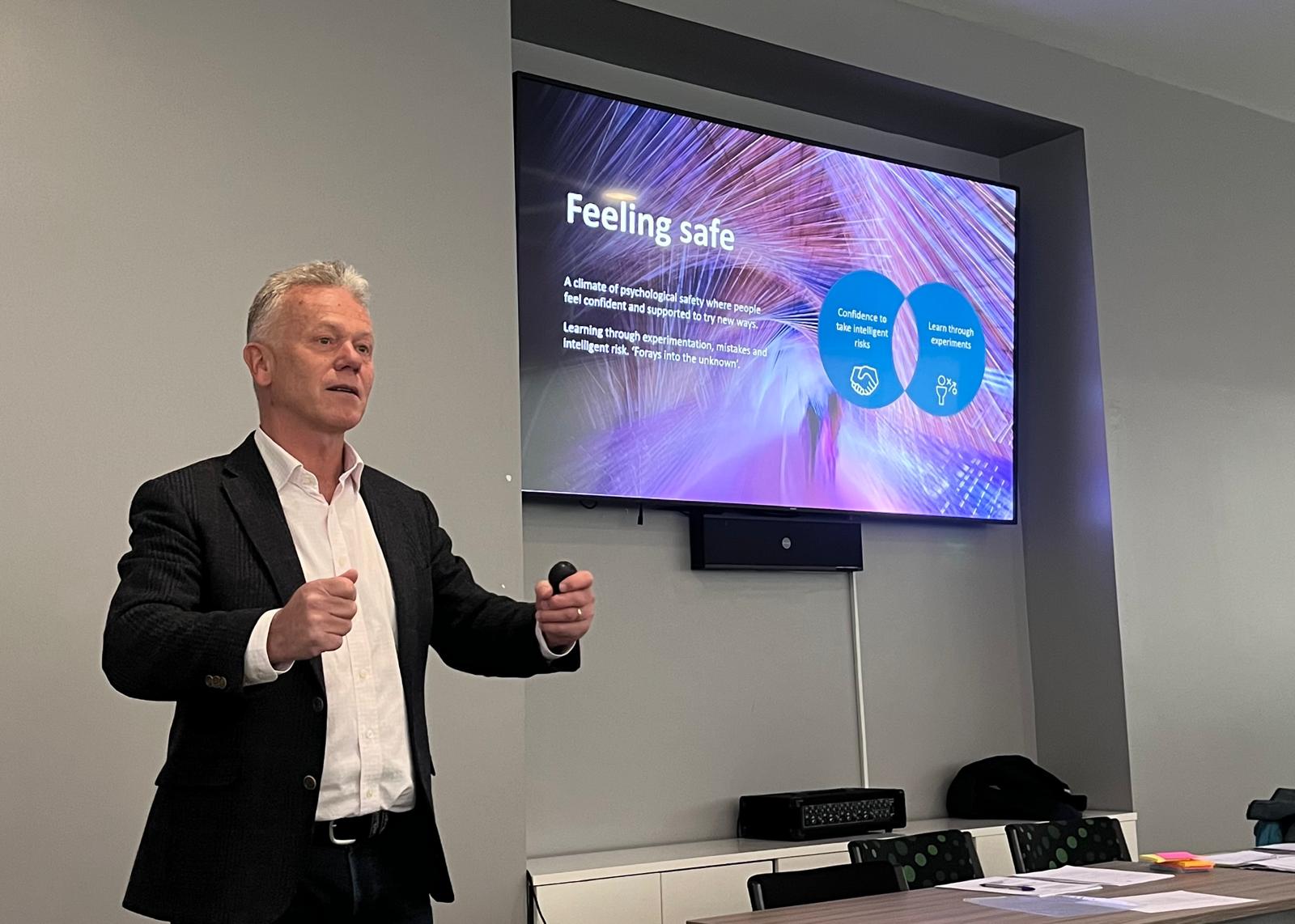
“Leadership in a time of international disruption” by Professor Simon Hayward from Alliance Manchester Business School
“Co-operatives already have a structural advantage: you are founded on principles and purpose. But having purpose is not the same as activating it. Are you engaging people with that sense of purpose as well? Do people connect with it emotionally and cognitively?” Professor Simon Hayward, a professor of Leadership Practice from Alliance Manchester Business School added.
Are We True To Our Co-operative Values?
Today, co-ops operate under significant pressure to scale, digitise and remain financially resilient. In response, values and distinctiveness may fade under competition and operational pressures. Growth and efficiency are necessary. Yet without deliberate anchoring, co-ops risk resembling the very corporate models they were meant to offer an alternative to.
This tension surfaces most clearly in the democratic nature of co-ops, where shared ownership may seem slow, roles may blur and clarity in decision-making becomes harder to sustain. 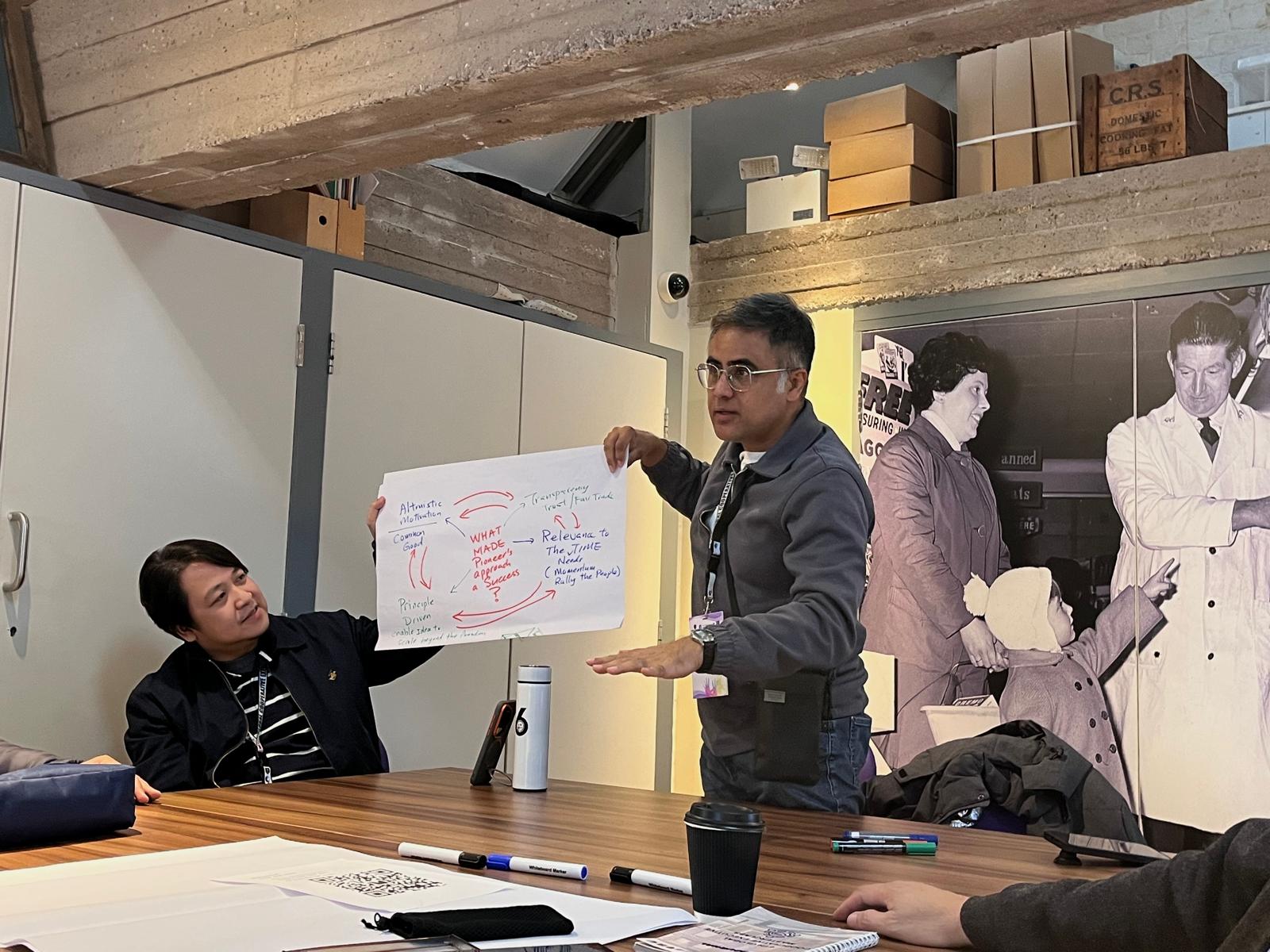
CLP Ashokan Ramakrishnan from A Good Space Co-operative
Mr Ashokan Ramakrishnan from A Good Space Co-operative attributed that it is perhaps not the lack of principles, but a lack of collaboration capability that spur this tension. “The ability to hold space where diverse perspectives can be heard, integrated, and translated into timely collective action is important,” he said.
To progress as a global movement must remain competitive, yet remain distinct while doing so.
Values-based Leadership
The leadership masterclass also focused on the unique attributes of a co-operative leader and values-led behaviours.
Several participants entered expecting sharper strategic tools. What they encountered instead was a reframing of leadership itself. 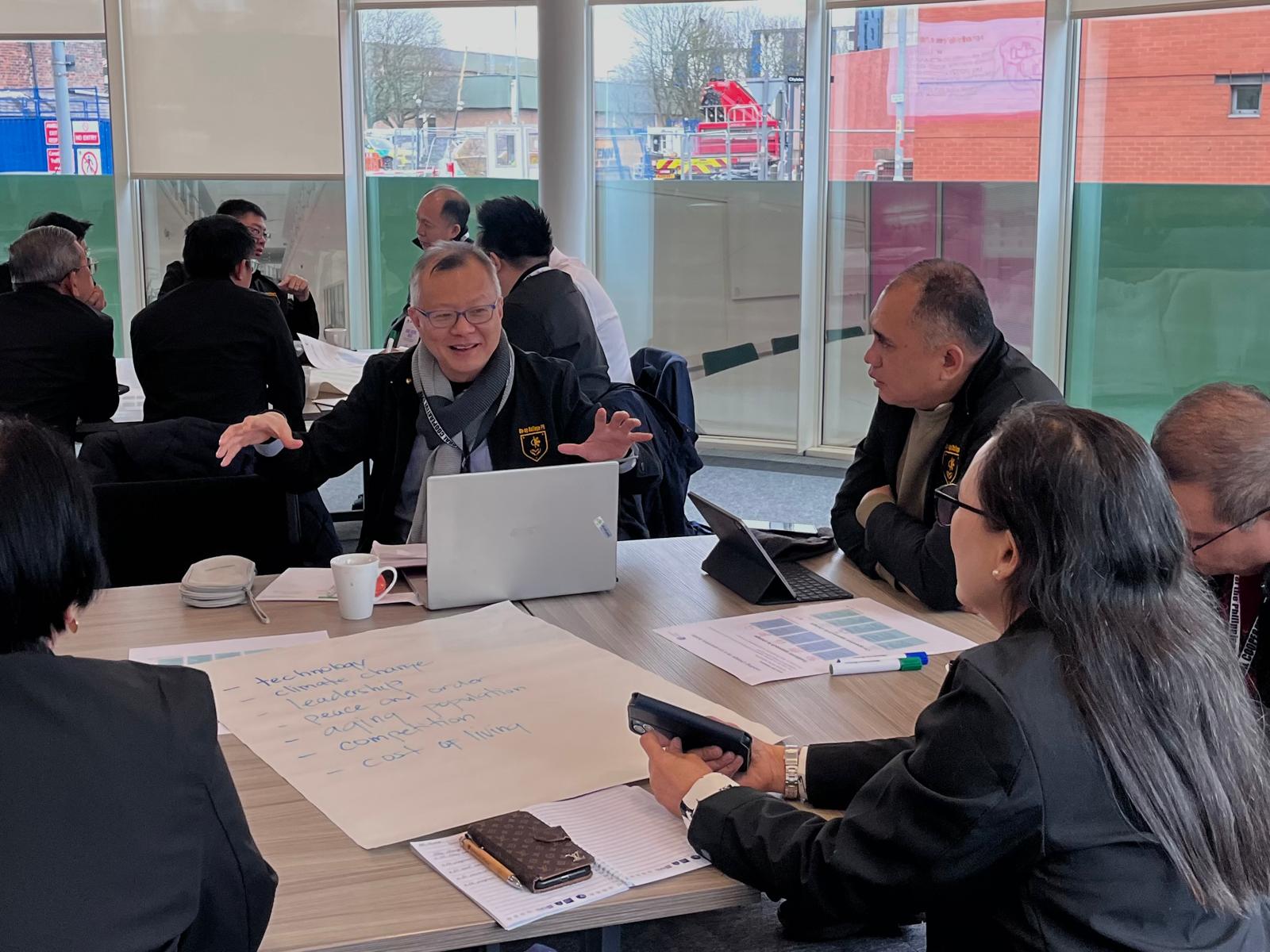
CLP Yoong Ee Chuan from Ngee Ann Polytechnic Consumer Co-operative
Mr Yoong admitted he once saw leadership as being “manager-centred”, one that concerns having the right answers and directing others. The programme challenged that instinct.
Professor Hayward’s sessions on agile leadership and psychological safety in workplaces emphasised that high-performing teams require environments where people can question, experiment, and contribute without fear. 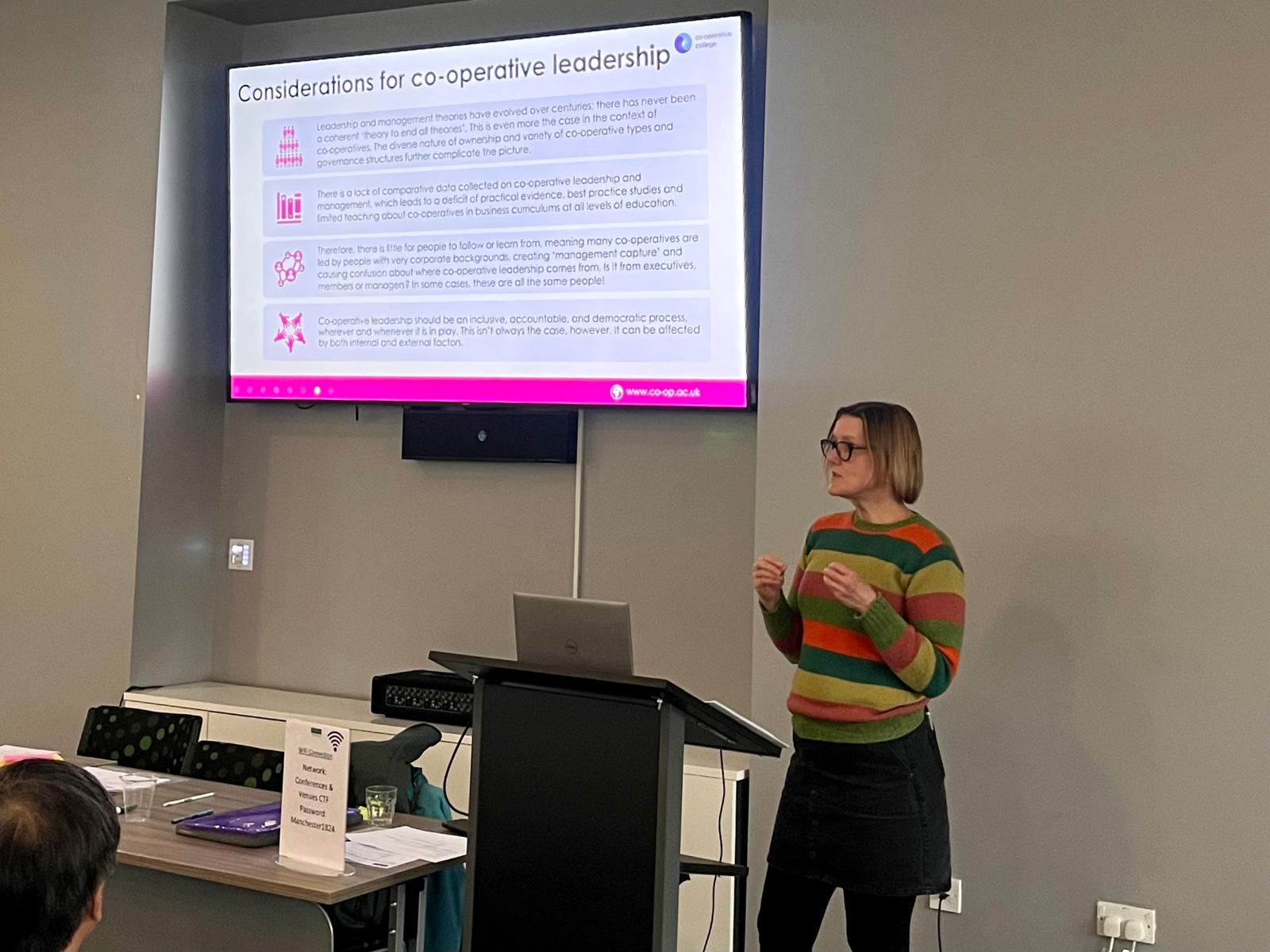
Dr Amanda Benson from The Co-operative College UK
Dr Amanda Benson, a Project and Research Officer from the Co-operative College UK, posed several rhetoric to the participants. “Think about who has the power to challenge, who retains the decision-making power in organisations? In co-ops, members ought to critically challenge and do not see it as disruption. Being able to handle it is part of strengthening trust.” she said.
The democratic nature of co-ops is not frictionless. Leaders must be able to hold tension, absorb scrutiny, and create space for dissent without retreating into centralised control. Having the ability to invite challenge, and withstand it, differentiates co-operative leadership.
Sounds idealistic? The cohort saw this translated into practice during a learning visit to The Co-op Group, one of the UK’s largest consumer co-operatives.
Delegates heard how values are being operationalised through structured mechanism designed to listen, support, and empower members, colleagues, and communities. From formal member councils to colleague networks, engagement was not lip service but embedded within daily practice. 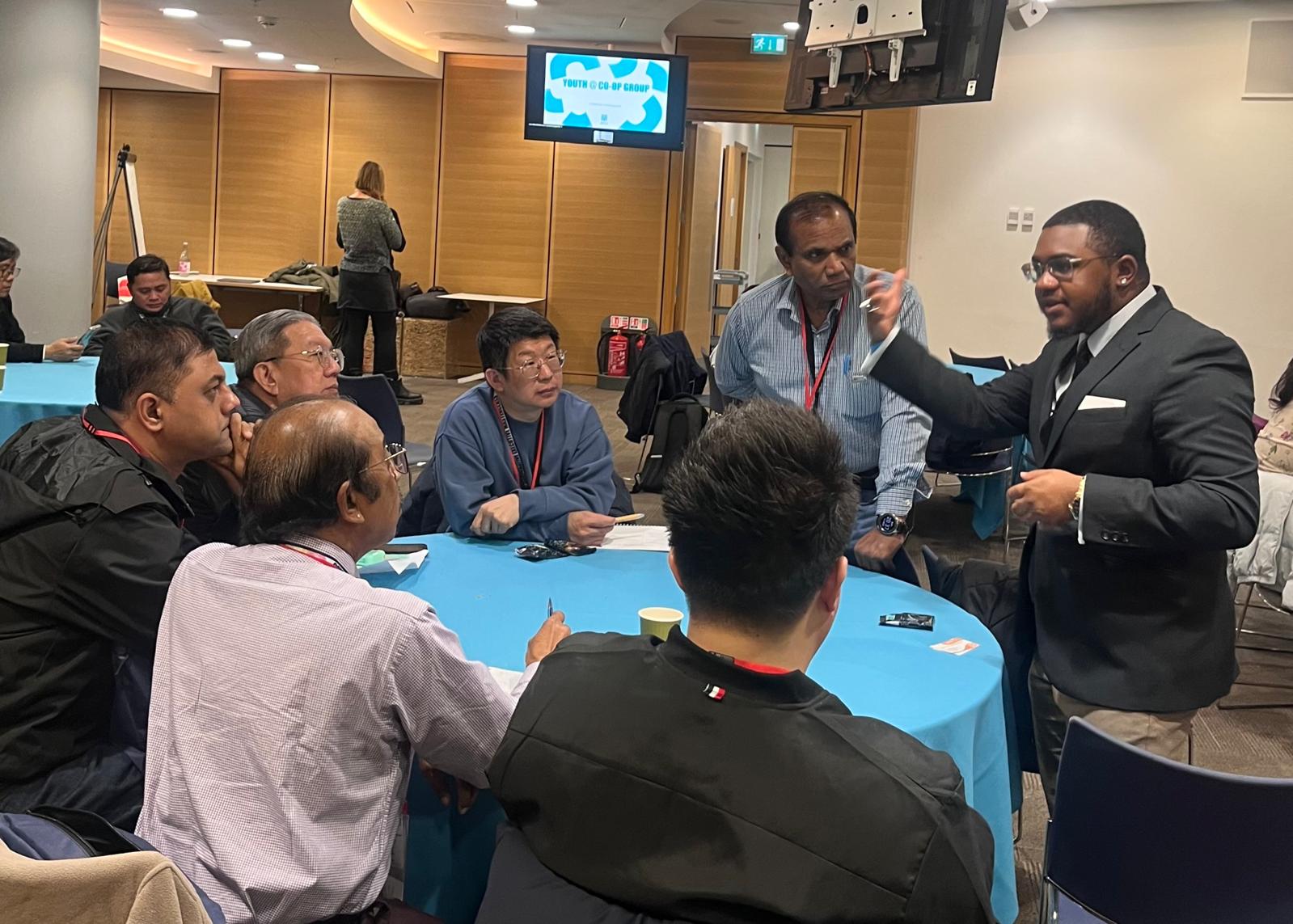
Engagement Session with Co-operative Youth Board Member, Remell Thompson-Bell
An example stood out in the sharing by the STRIVE Network, a group representing young colleagues of The Co-op Group. They explained that inclusiveness means having a seat at the table, not tokenism. The STRIVE network was created in response to provide structured platforms for diverse input and influence in the co-op’s decision-making.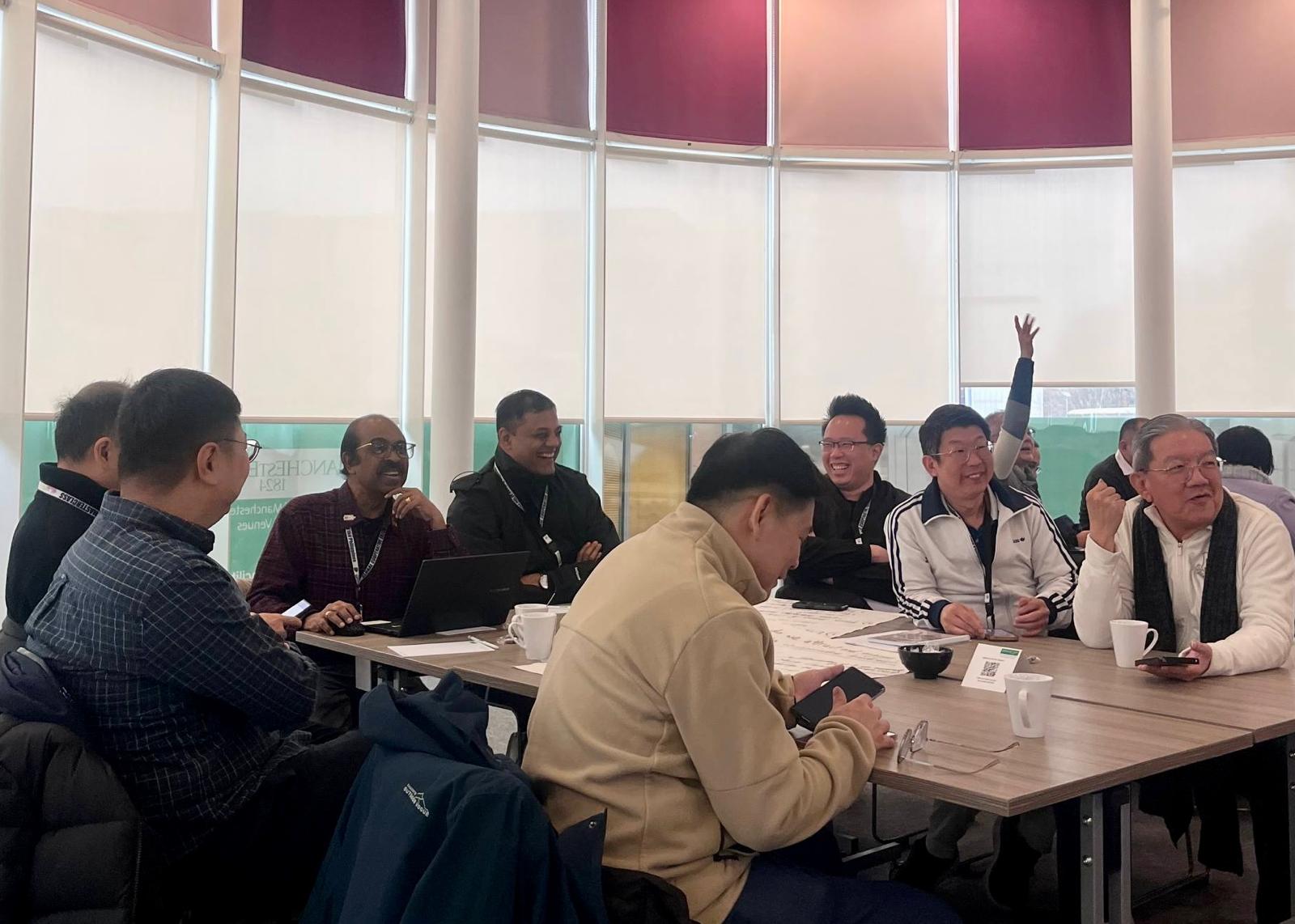
For participants of the CLP, returning to the birthplace of the movement provided clarity that leadership is not only all about performance. It is about translating the “why” in what we do.
Mr Ho Wee Fun from NTUC Foodfare said: “By integrating these learnings into our strategy and daily practices, we can keep our co-op vibrant, relevant, and impactful.”
Under the CLP, the participants will attend a series of 5 bi-weekly lessons starting from July with the Singapore University of Social Sciences, where they will explore the seven core principles behind leadership management.
There will also be mentorship and networking opportunities for them to exchange knowledge with stakeholders both within and outside the Movement.
By Lim Yih Ching, edited by Mary Njo