
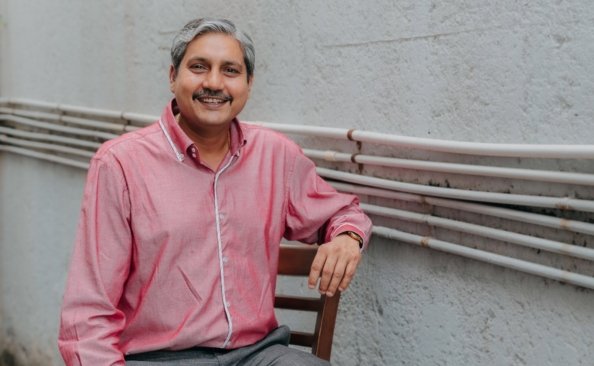
In Conversation with Sanjeev Tiwari on the dignity of work, advocating for workers
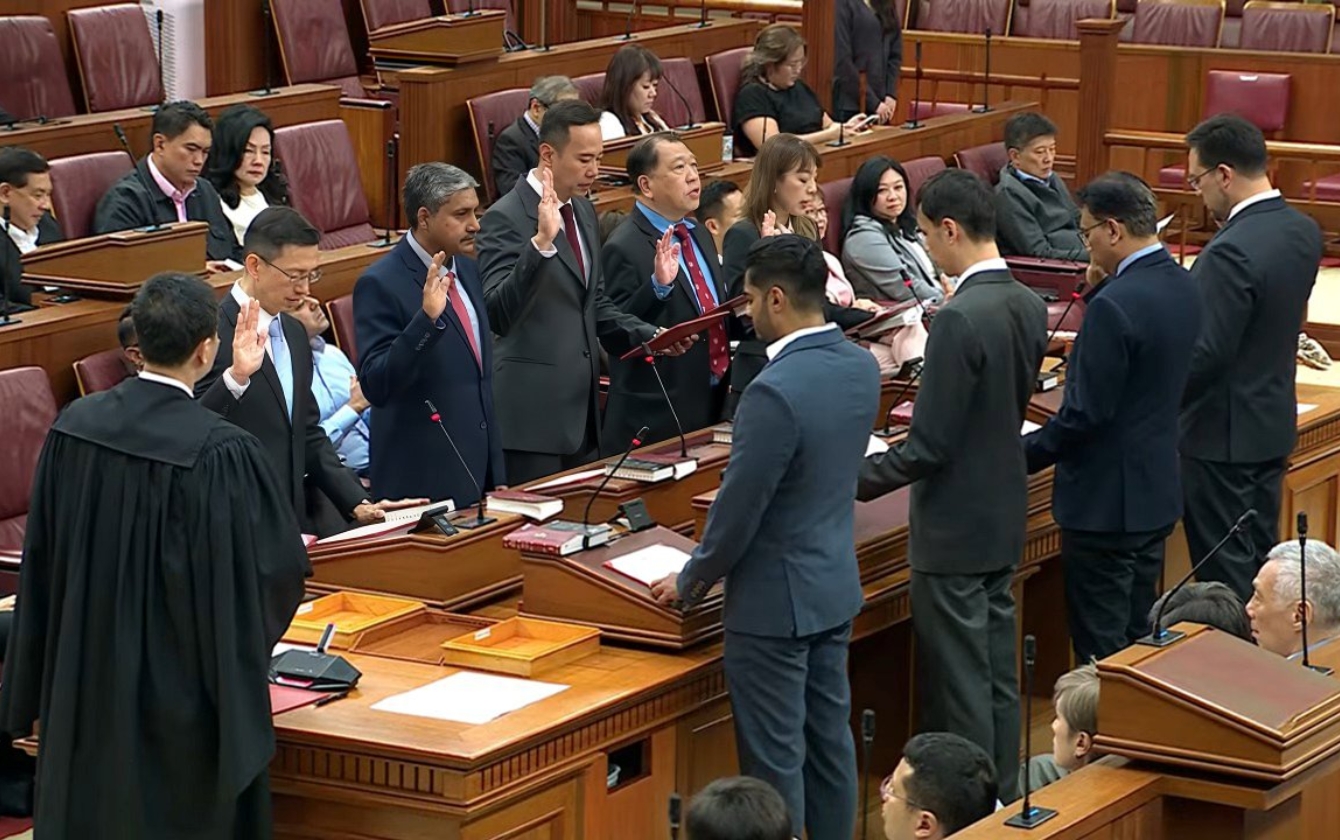
2026 is shaping up to be a busy year for Mr Sanjeev Tiwari.
The long-time unionist, also the General Secretary of the Amalgamated Union of Public Employees (AUPE), has been appointed a Nominated Member of Parliament, even as he continues his work in the co-operative sector, where he has spent recent years closely involved with credit co-operatives and their members.
Much of that work happens outside formal settings. As chief executive of the AUPE Credit Co-operative and chairperson of the AUPE General Service Co-operative, Mr Tiwari’s day-to-day often involves addressing practical issues, from workers navigating job changes to members managing financial strain in a shifting economy. These are concerns that rarely fit neatly into policy frameworks, but surface repeatedly on the ground.
His parliamentary appointment brings those experiences into a national space, where questions of employability, financial readiness and the dignity of work are increasingly part of public debate.
In this conversation, Sanjeev reflects on what his experiences in the labour and co-operative movements have taught him, and how those perspectives may inform his approach in parliament.

You have worked closely with collective organisations, including co-operatives and unions. Was there a particular experience that shaped your desire to do more for workers and communities?
I would say it is not one single incident, but many similar conversations over the years. Often, these involve workers who are struggling, sometimes because of poor financial judgement or over-indulgence in lifestyle needs, and sometimes simply because they were not sufficiently prepared for unexpected challenges. Collectively, these experiences shape the way I see the work that unions and co-operatives do.
Beyond wages and employment, what stands out most to me is the dignity of the worker. At the workplace, dignity is fundamental. When we deliberate on policies, it is important to always place the person at the centre and consider how these decisions affect them. Today’s workforce faces intergenerational challenges, compounded by fast-changing technological advancements. This creates pressure on individuals doing their jobs. Keeping dignity and well-being at the heart of policies is something I hope to continue highlighting in Parliament.
From your experience as both a unionist and a co-operative leader, what do you think co-operatives do especially well that is often overlooked in national conversations?
From the union’s perspective, we focus on employment and productive longevity. Underpinning employment is financial readiness. People work to earn a living, and this is where co-operatives play a vital role that is often not fully recognised.
Through co-operatives, we help workers plan better, save better and manage their finances more effectively. This has an indirect but significant impact on employment. When workers are financially prepared, they are better positioned to make sound decisions, take up better job opportunities, and pursue upgrading and reskilling without worrying excessively about loss of income or overtime.
Unions and co-operatives go hand in hand. Both are social organisations, not profit-driven entities. Our purpose is to ensure members benefit over the long term. While some may see co-operatives merely as outfits that promote thrift and loan (amongst other benefits), there is a deeper purpose tied closely to employment. In the labour movement, we often say that the best welfare you can give a worker is a good job. When that job is supported by sound financial management through co-operative initiatives, you are taking care of the worker not just in the present, but over the long term.

As a Nominated Member of Parliament, do you see yourself advocating this relationship between unions and co-operatives more clearly at the national level?
Yes, I think relationships are always important, especially in Parliament. Advocating the initiatives of both unions and co-operatives is crucial. Given this opportunity, I hope to highlight the values of both movements, as well as the need for better policies governing unions and co-operatives. They serve different but complementary roles, and both are important in supporting workers and communities.
Looking back on your past three years as Credit Sector Chair within the Singapore Co-operative Movement, what are some key takeaways from this journey?
One of the most important takeaways is raising awareness of the role co-operatives play in Singapore. In the financial sector, people tend to think first of the larger institutions, while co-operatives are often an afterthought. Efforts by Singapore National Co-operative Federation and the credit co-operatives to bring greater visibility to this sector have been significant. The centennial celebrations, in particular, helped highlight what co-operatives have contributed over many years.
Another key takeaway is the tangible assistance provided to members. Across the credit sector, co-operatives have helped thousands of members, amounting to millions of dollars in assistance. This support goes beyond credit. It helps individuals save their jobs, get through emergencies, and access assistance they may not receive elsewhere. Importantly, it provides reassurance to families, knowing that there is support during difficult times.
Finally, there is the role co-operatives will continue to play in the future. Staying relevant in a changing world is essential, and there is also a strong call for younger generations to step up and lead co-operatives forward. Transformation will require fresh perspectives, and younger leaders have an important role in shaping how co-operatives evolve.
What continues to motivate you to do more in the social good and social impact space?
There are two main drivers. First, being in the union and co-operative space allows you to see how your work directly impacts people and their families. Knowing that what you do makes a difference is deeply motivating. It is also a way of giving back to society in small but meaningful ways, helping members uplift their lives.
Second, when you help a member, the impact extends beyond the individual to their family. Whether through financial support or employment stability, you are helping to create pathways for the next generation to do better. Over time, this uplifts society as a whole. That bigger picture is what continues to drive me.
How do you hope to work with public agencies and encourage public participation to drive positive change in Singapore?
Public agencies are already doing quite a lot, but there is room to better understand how policies impact people on the ground. Policies are often designed to address broader issues, but their granular effects may not always be visible during implementation.
Organisations like credit co-operatives are close to members and can see where people fall through the cracks or where policies may unintentionally miss certain groups. By sharing these ground realities, we can help agencies refine and improve policy implementation, making it more responsive and inclusive. Ultimately, this helps ensure that support reaches those who need it most.
Interview responses have been edited and condensed for clarity.