
September 2026 Issue: Co-operator Newsletter Quarterly September 2026
Skin in the game: IPS' Community Business Incubator support formation of multi-stakeholder co-ops
A business incubator usually starts with a founder and an idea, then asks what it would take to turn that idea into a viable company.
The Institute of Policy Studies’ (IPS) new Community Business Incubator begins with the following question in mind: What if the people whom a business is meant to serve could also own it, work in it and have a say in how it is run?
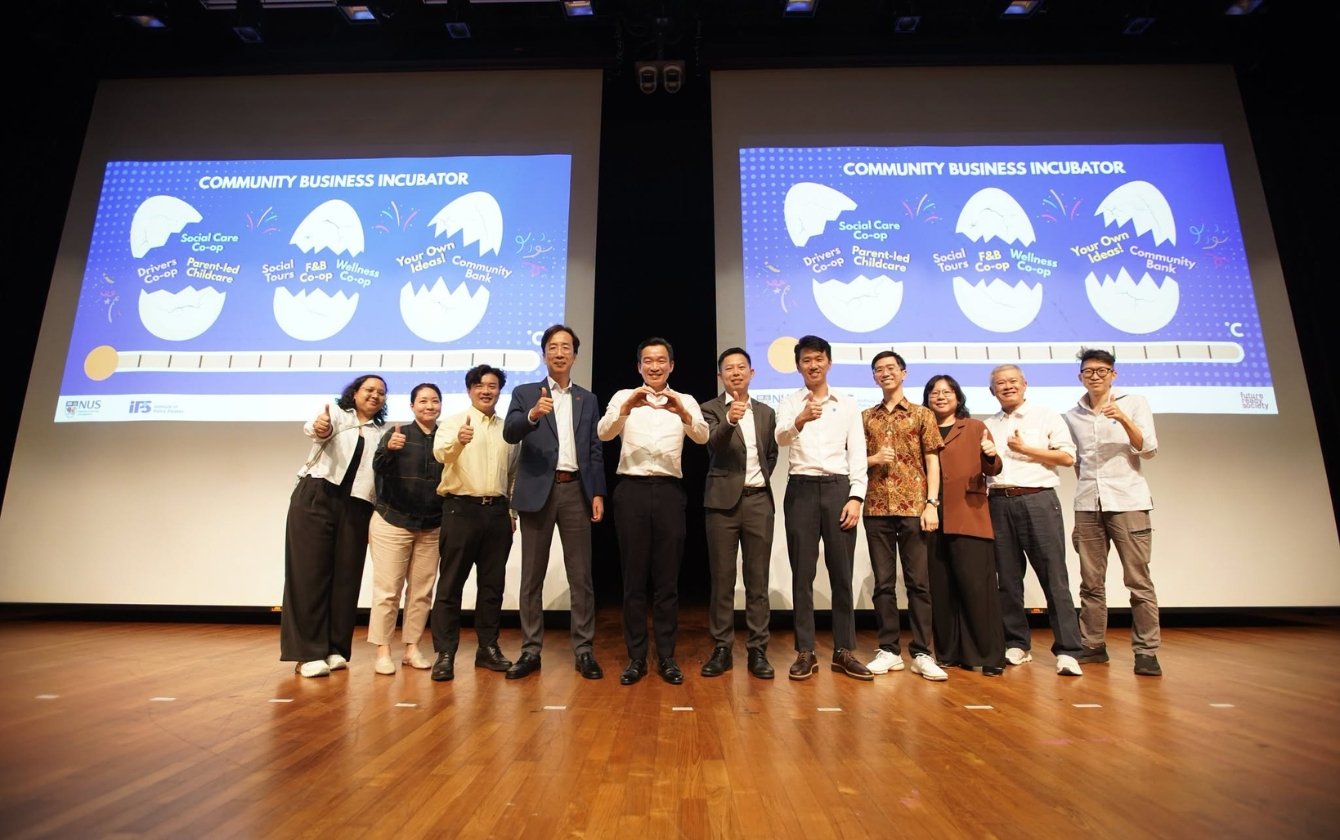
Launched in late August, the five-month programme will support the formation of community-owned enterprises, including multi-stakeholder co-operatives. It is helmed by Dr Justin Lee, Head of Policy Lab and Senior Research Fellow at IPS, and Dr Wong Kang Li, Research Fellow, who are principal investigators for the project.
Senior Parliamentary Secretary for Law and Social and Family Development Eric Chua opened the seminar, framing the programme around a shift in how communities, particularly those that may require more support, are viewed.
Families living in rental flats are too often spoken of primarily as beneficiaries of assistance, he said. Yet among them are residents already running home-based businesses, with skills, ideas and the motivation to earn an income, but perhaps without the networks, capital, business knowledge or access to customers needed to go further.
The question is whether these capabilities can be pooled.
“Can we design businesses that fit people’s circumstances instead of always expecting people to fit the business?” Chua asked.
From income to ownership
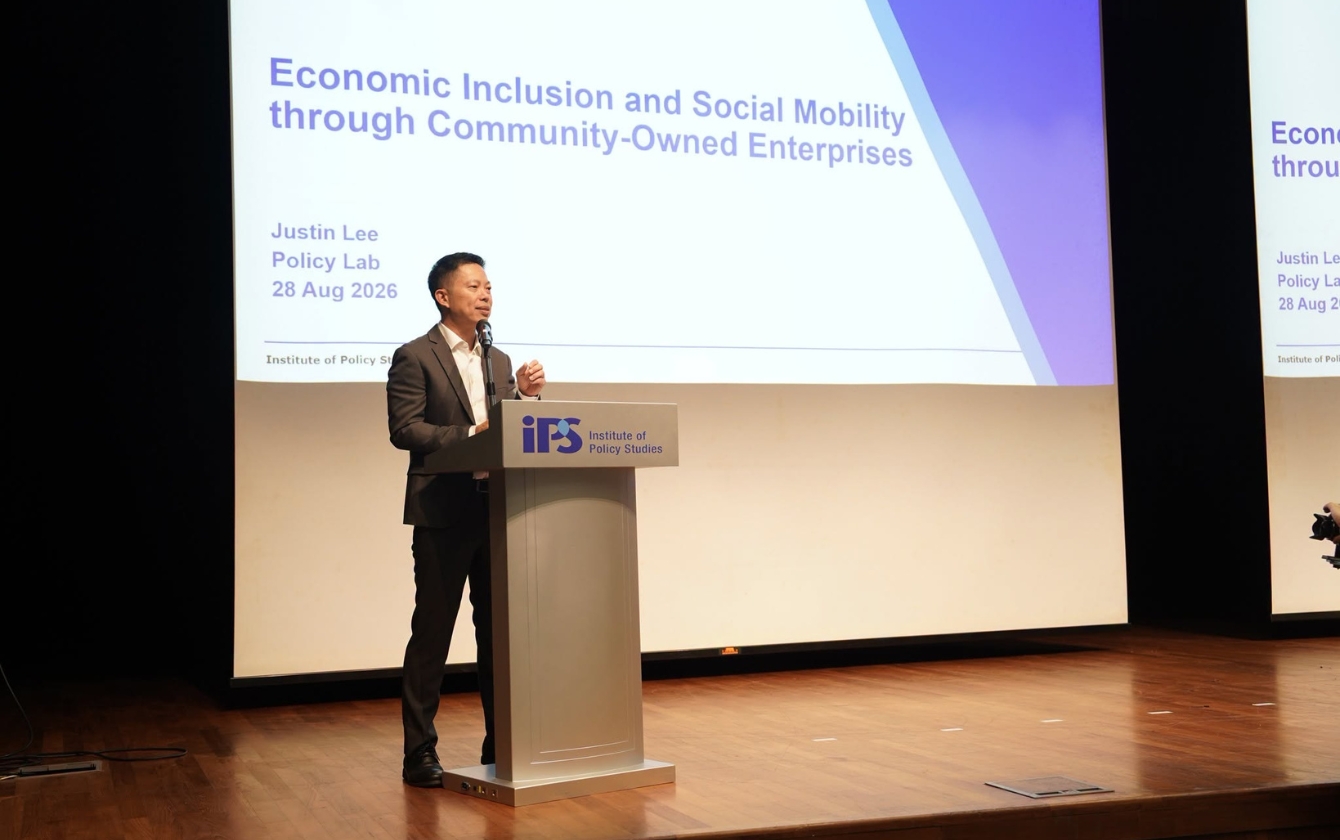
Underpinning the experiment is the idea of community wealth building, a place-based approach that gives communities a greater stake in the businesses, assets and institutions around them, rather than positioning them only as recipients of support.
“If inequality is a structural issue, then focusing on building individual family wealth is not enough,” Dr Lee said. “Perhaps we should focus on community wealth.”
He described the idea as a form of “communitisation”. Just as nationalisation puts assets under the state and privatisation places them in private hands, community ownership presents another possibility: allowing communities to collectively own and manage certain assets for their common benefit.
It is also part of a broader shift within the IPS Policy Lab towards putting research into practice. As Lee put it at the launch, IPS has moved from simply being a think tank towards also being a “think-and-do” institution. IPS describes its Policy Lab as developing and testing social and policy innovations through pilots and experiments.
The idea of giving people more ownership over the businesses they contribute to is not entirely new to the research team. In a commentary for The Straits Times, Dr Wong and IPS research associate Wilson Goh argued that rising incomes alone have not eliminated disparities in wealth. They made the case for forms of “shared capitalism”, including employee ownership and profit-sharing, which could allow workers to accumulate capital alongside wages.
The Community Business Incubator takes that proposition one step further by testing what ownership could look like at the community level.
Building a business together
Over five months, participants will first form groups before undergoing training in collective decision-making and business fundamentals. They will then be matched with potential co-entrepreneurs with complementary skills, receive business mentoring and consultancy support, recruit more members to broaden their base, and receive help to secure funding.
IPS has described the programme as comprising both neighbourhood-based “Roving Lab” runs and an HQ Incubator.
What makes the model particularly unusual is the emphasis on multi-stakeholder ownership.
Instead of a business being controlled solely by its founder, investors or one class of members, different groups with an interest in its success could be represented. Depending on the business, these could include workers, consumers, residents, service users and other community stakeholders.
That also makes running one considerably messier.
Dr Lee stressed that simply registering an organisation as a co-operative does not guarantee empowerment. A co-operative might practise one-member-one-vote but still leave most decisions to a small, elected management committee. Collective ownership on paper and meaningful participation in practice is not necessarily the same thing.
Nor does social purpose excuse a business from the basic realities of staying afloat.
“A good intention is not yet a sustainable business model,” Chua said. Community enterprises still have to attract customers, manage costs, govern themselves fairly and, crucially, maintain trust among their members.
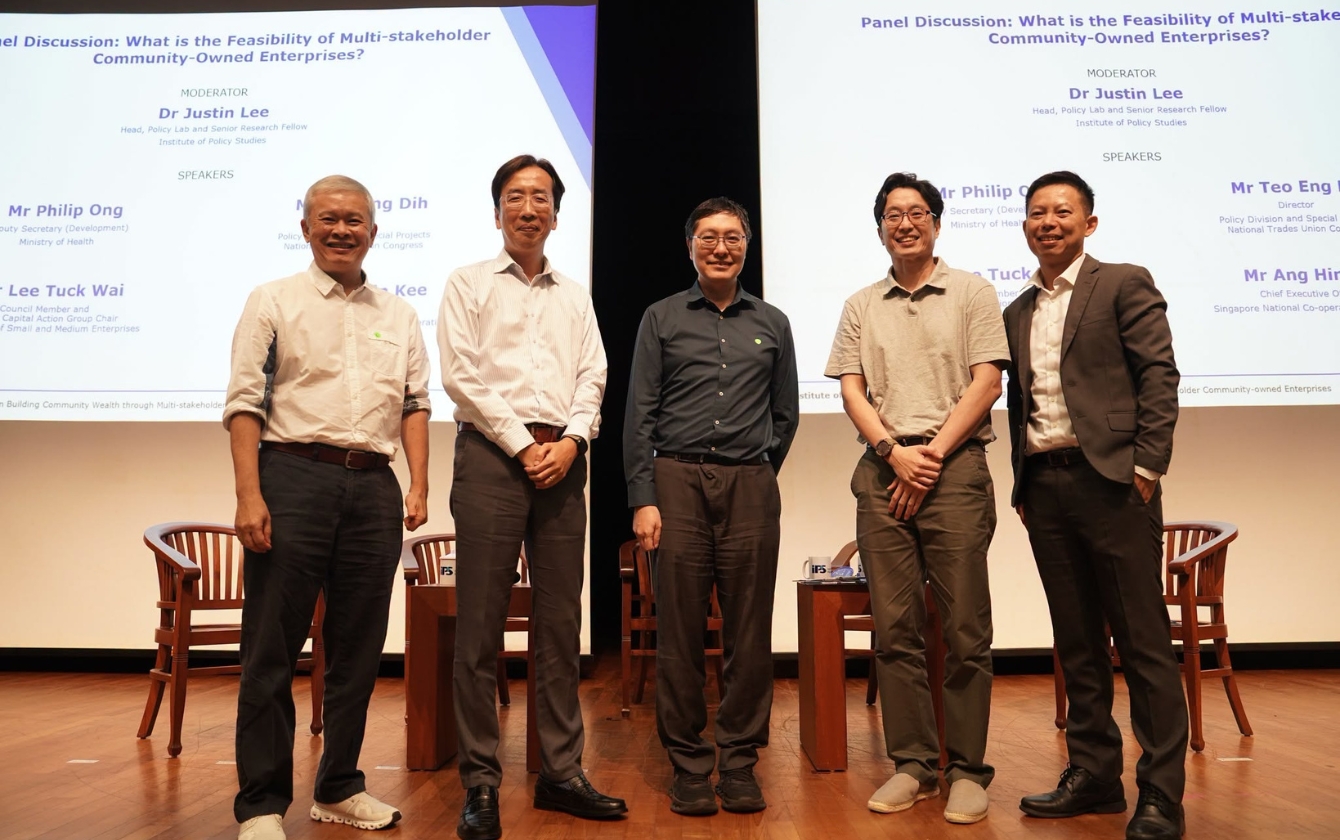
That tension surfaced repeatedly during a panel discussion chaired by Lee. Panellists considered how co-operatives can access capital, remain competitive and reconcile democratic participation with efficient decision-making.
Mr Philip Ong, Deputy Secretary (Development) at the Ministry of Health, argued that co-operatives could play a role in addressing both economic inequality and social capital. But he also pointed to familiar obstacles: a lack of awareness, difficulties accessing capital and the absence of sufficiently supportive conditions for community-owned organisations to thrive.
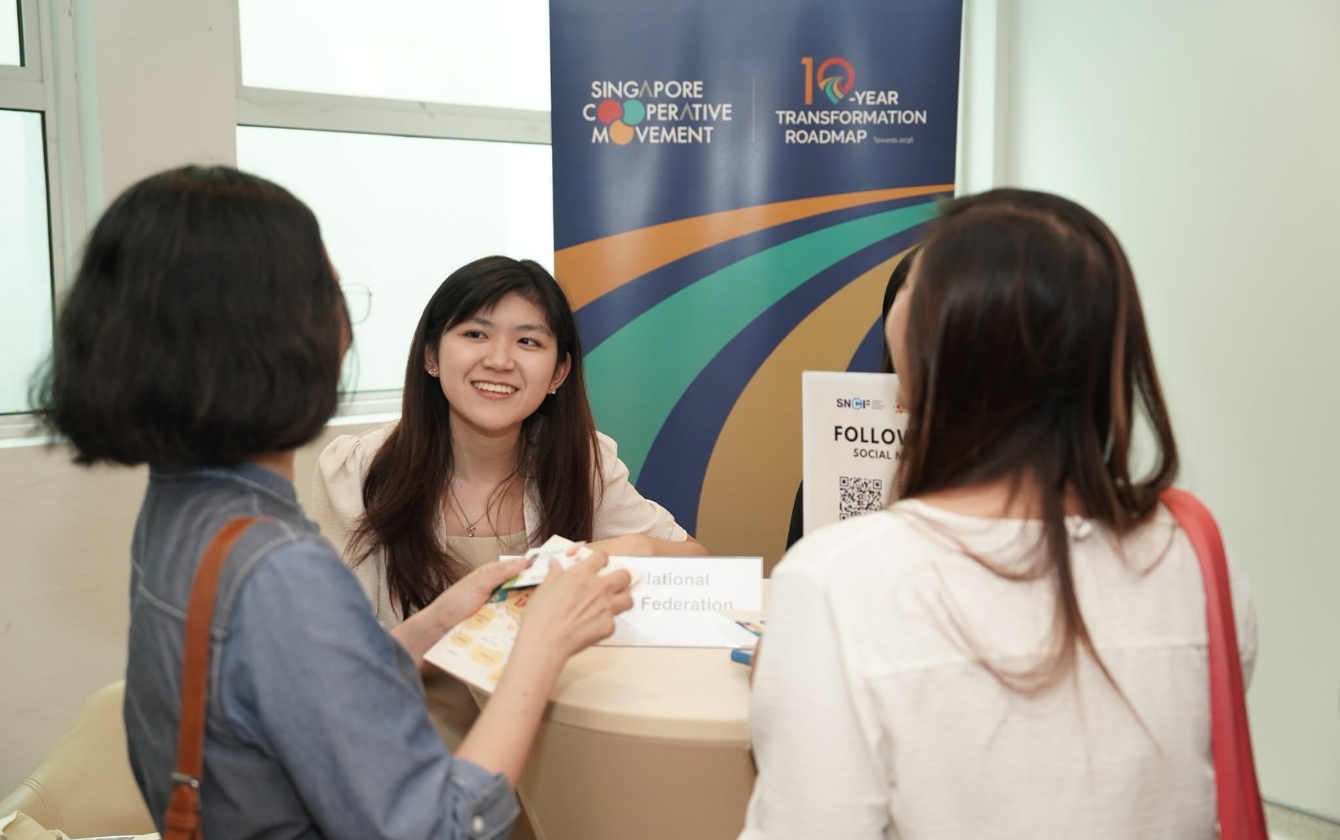
Mr Ang Hin Kee, the chief executive of Singapore National Co-operative Federation (SNCF), similarly cautioned against assuming that employees can simply be turned into business owners overnight. Worker ownership needs to be accompanied by the discipline, trust, governance and business knowledge required to run an enterprise, Ang argued. “There’s a transition that they go through,” he said.
Ang was quick to add that SNCF can provide aspiring co-operatives with grants, mentors and guidance. But he saw a wider role for the federation too: advocating for an environment in which community-owned businesses have room to succeed.
That could eventually mean examining whether rules conceived principally around market competition adequately recognise the value created by businesses that keep wealth, employment and decision-making within a community.
Early game challenges
That is partly why IPS is treating the incubator as an experiment, rather than presenting community ownership as a ready-made answer.
Multi-stakeholder businesses can be harder to govern precisely because the people sitting around the table may want different things. Workers may prioritise wages and working conditions. Consumers may want lower prices. Community members may place greater weight on social outcomes. Investors, where present, may expect financial returns.
Bringing those interests together makes decision-making harder. The proposition being tested is whether it can also make the resulting business more responsive to the people around it.
For Chua, that distinction changes the relationship between communities and the problems they face.
When such enterprises work, he said, “the people affected by the problem are not merely recipients of help. They become active participants and co-owners of the solution.”
The Community Business Incubator will now have to find out whether that sense of ownership can survive the considerably less romantic work of balancing the books, finding customers and making decisions together.
That, after all, is where having skin in the game begins.
By Sng Ler Jun
Learn more here.
Image Credits: National University of Singapore’s Institute of Policy Studies