


Hosted by the World Council of Credit Unions (WOCCU), the 2026 World Credit Union Conference (WCUC 2026) took place in Sydney, Australia, from 20 to 22 July. More than 2,400 credit union professionals from more than 39 countries attended this year’s conference.
Ms Evelyn Siow, Executive Council member of the Singapore National Co-operative Federation (SNCF), led this year’s delegation, which comprised credit co-operative representatives from AUPE Credit Co-operative, Citiport Credit Co-operative, POLWEL Co-operative Society, Singapore Mercantile Co-operative Society, The Singapore Teachers' Co-operative Society, TCC Credit Co-operative, and TRC Multi-Purpose Co-operative Society. Central Co-operative Fund Committee (CCFC) Representative, Mr Yeo Chun Fing, also joined this year’s delegation, marking the first time a CCFC member has participated in an international conference as part of the delegation.
WCUC serves as a platform for credit union professionals to network and learn from one another, offering our Singapore delegates the opportunity to learn from countries beyond our ASEAN circle.
Digital transformation isn't optional anymore
People expect things to be fast and easy to use. Digital services are no longer bonus features that give co-operatives (or any organisation) a competitive edge; they have become essential. Well-integrated, unified platforms are what give organisations an edge. For instance, Brazil’s Sicredi’s Chief Financial Officer, Mr Alexandre Barbosa, shared how their federation has scaled with artificial intelligence (AI) in their network of over 90 credit co-operatives, through a unified platform that supports shared infrastructure, governance, and reusable AI assets, balancing local autonomy with system-wide consistency. The use of AI has helped employees save time from routine work, allowing them to shift toward consultative roles that strengthen their co-operatives’ community impact.
Closer to home, the Co-operative Bank of Vietnam, winner of this year’s WCUC Digital Award, shared how they support nearly 1,200 of their credit co-operatives across Vietnam through a shared digital banking platform. Members are able to transact seamlessly online or make national payment via the banking application, which is connected to everyday platforms.Mergers as a growth strategy, not a last resort
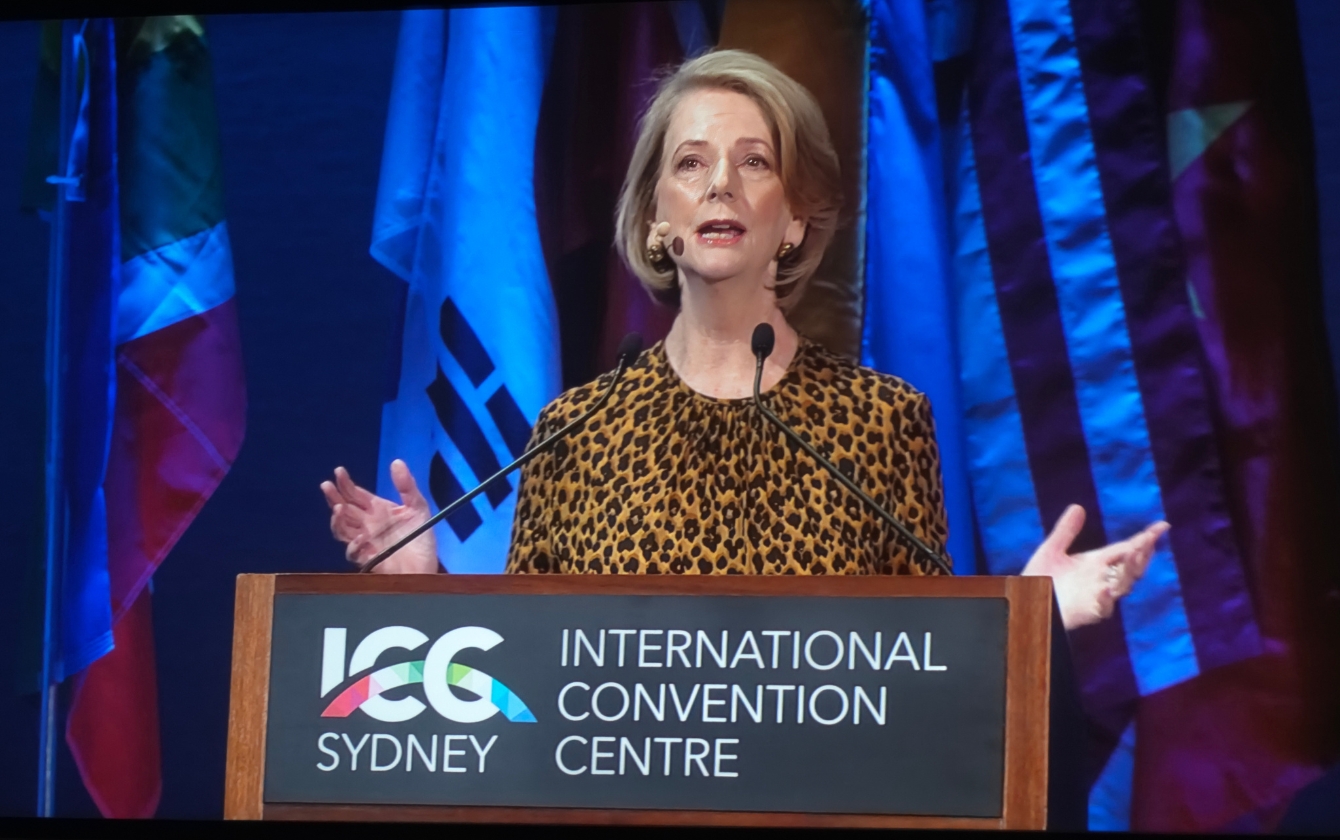
In her Keynote address, Ms Julia Gillard, 27th Prime Minister of Australia, highlighted the need for diverse voices and the co-operative models to navigate AI, climate change, and geopolitical fragmentation.
In her keynote address, the Prime Minister of Australia Julia Gillard shared a different perspective on mergers. Contrary to the view that mergers happen only when organisations struggle to operate independently, Australia’s credit unions, such as Unity Bank and Teachers Mutual Bank, have each pursued mergers with their respective partners as a deliberate tool for growth and sustainability, allowing combined resources to fund enhanced, more holistic services. Mergers there rarely result in job losses. Instead, merged credit unions typically continue sustaining existing services while their now ‘increased’ headcount supports future growth through new departments and new roles.
Many Australian mutual banks and credit unions have merged over the years. In the 1990s, there were about 400 credit unions in Australia, but that had quickly dropped to slightly more than 150 by the end of 2005, and now there are less than 54 customer-owned banks left. Mergers would allow co-operatives to share resources and create a stronger, more prominent brand presence too.
Leadership succession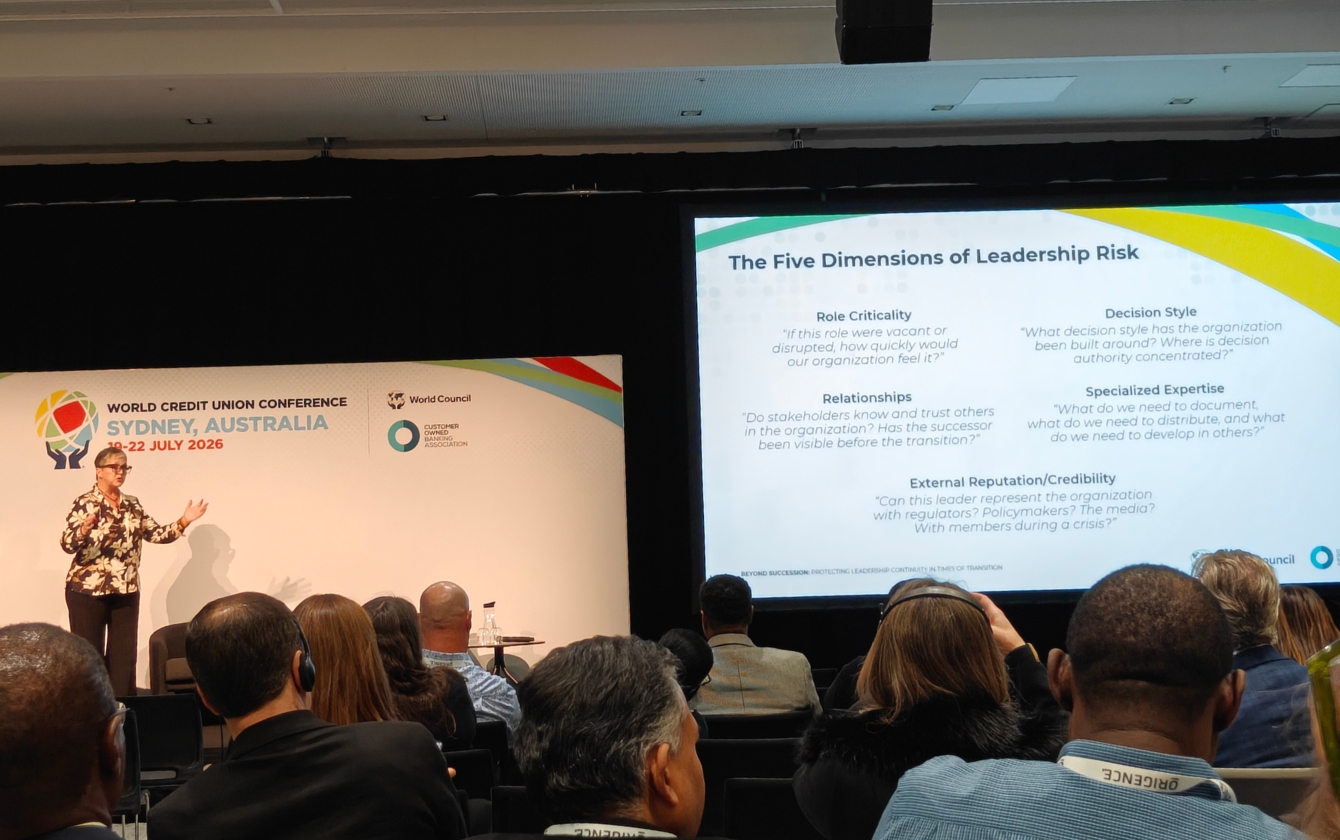
Ms Heather McKissick, CEO of Credit Union Executives Society (CUES), challenged leaders to rethink succession planning. It's not about talent - it's about continuity of influence.
One suggestion raised during the sessions was to include young talent or emerging leaders on boards and committees. Several credit unions shared that bringing in younger voices and fresh perspectives have helped them better engage and attract younger members. A case in point is the First Federal Co-operative Union Ms Dawn Williams, its Chief Executive Officer is the only board member of their co-op above 55 years of age. It was a bold move, taken as part of a strategy to increase their relevance and attract younger members. In June 2019, they had a membership of about 690 with an average age above 50 and by April 2026, their membership grew to over 12,000 with an average age of 35, a more than 17-fold growth.
At the same time, leadership renewal should not mean losing the experience of the current and those who came before. Senior leaders and those who have retired can continue to play an important role as mentors, passing on their knowledge and experience while giving the next generation room to lead. This balance of continuity and renewal will be key to strengthening the Movement’s leadership for the next decade.
Around the world, credit unions and co-operatives are grappling with many challenges we are all too familiar: how can we continue to attract younger members, how do we understand society’s changing needs, and how do we remain relevant in a rapidly evolving world? While there is no one-size-fits-all solution, the experiences shared in Sydney show the importance of being willing to listen, adapt and evolve. These global perspectives offer useful lessons for building a Movement that continues to meet the needs of both today’s members and the generations to come.
WCUC 2027 will take place in Dublin, Ireland.
By Wong Si Ning, edited by Mary Njo