

Two of Singapore's co-operatives (co-ops) turned 100 this year. Both have survived wars, economic upheavals and sweeping changes to the way Singaporeans live and work.
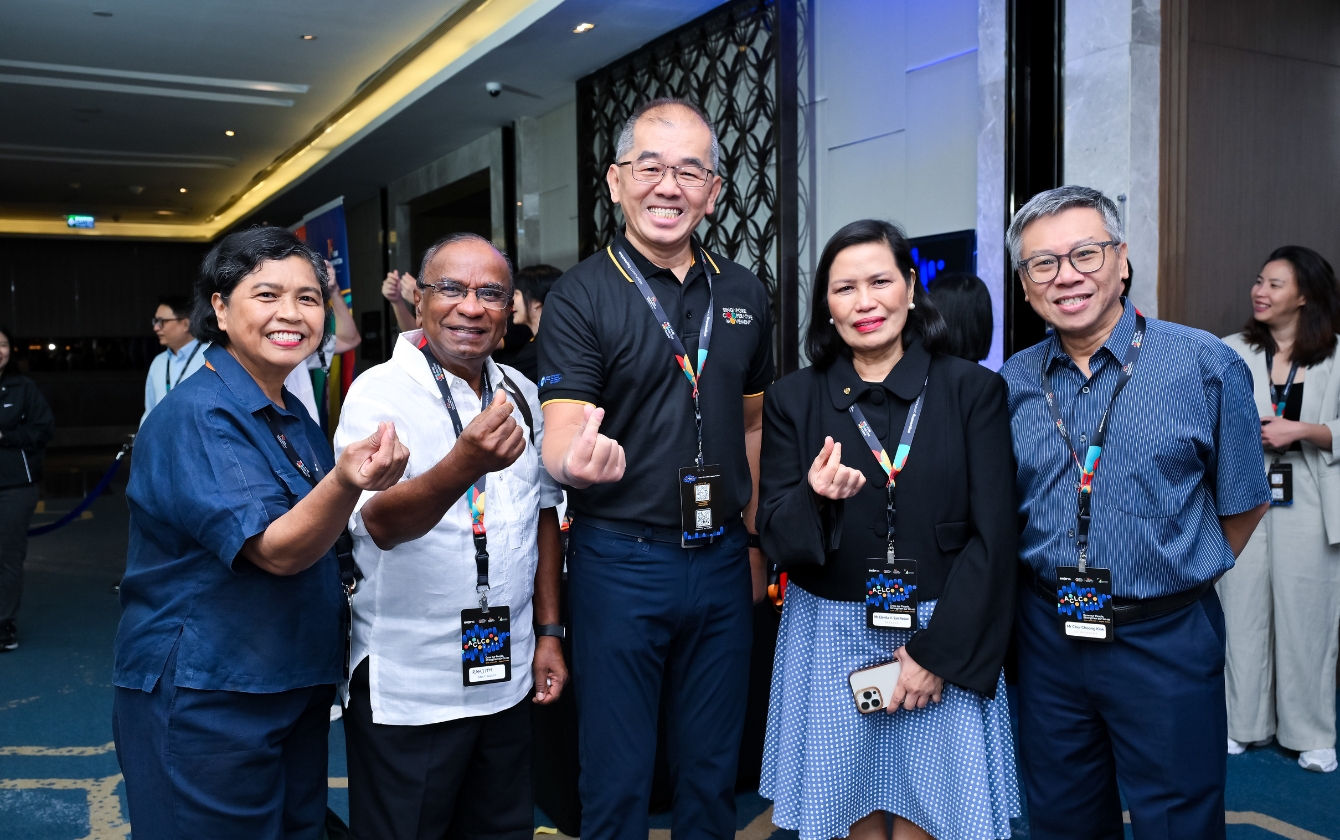
But longevity, as Singapore National Co-operative Federation (SNCF) Chairperson Tng Ah Yiam reminded a gathering of co-op leaders in Bangkok, is no guarantee of survival.
"Every strong co-op begins with capable people. We need good leaders. We need people who are willing to step forward. And we need to prepare the next generation to carry on our work," said Mr Tng.
The Singapore Police Co-operative Society and Singapore Mercantile Co-operative Society are the latest to reach their centenaries, bringing the number of local co-ops that have crossed the milestone to five.
For a movement that has spent a century helping Singaporeans meet needs ranging from affordable groceries to financial assistance, the challenge is to ensure that another generation will be willing and able to carry on its work.
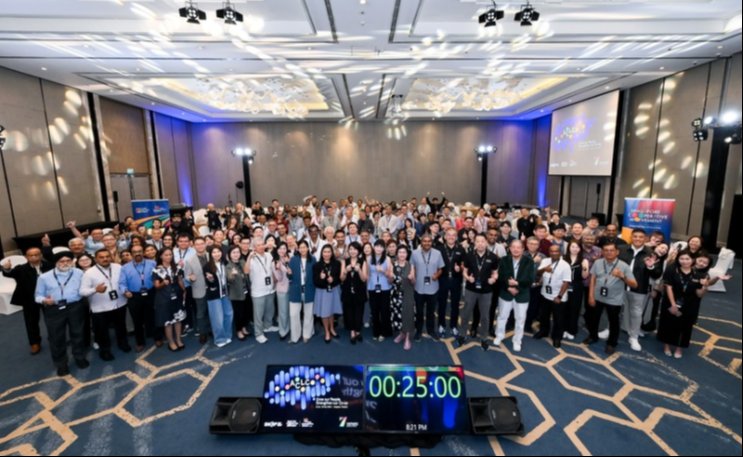
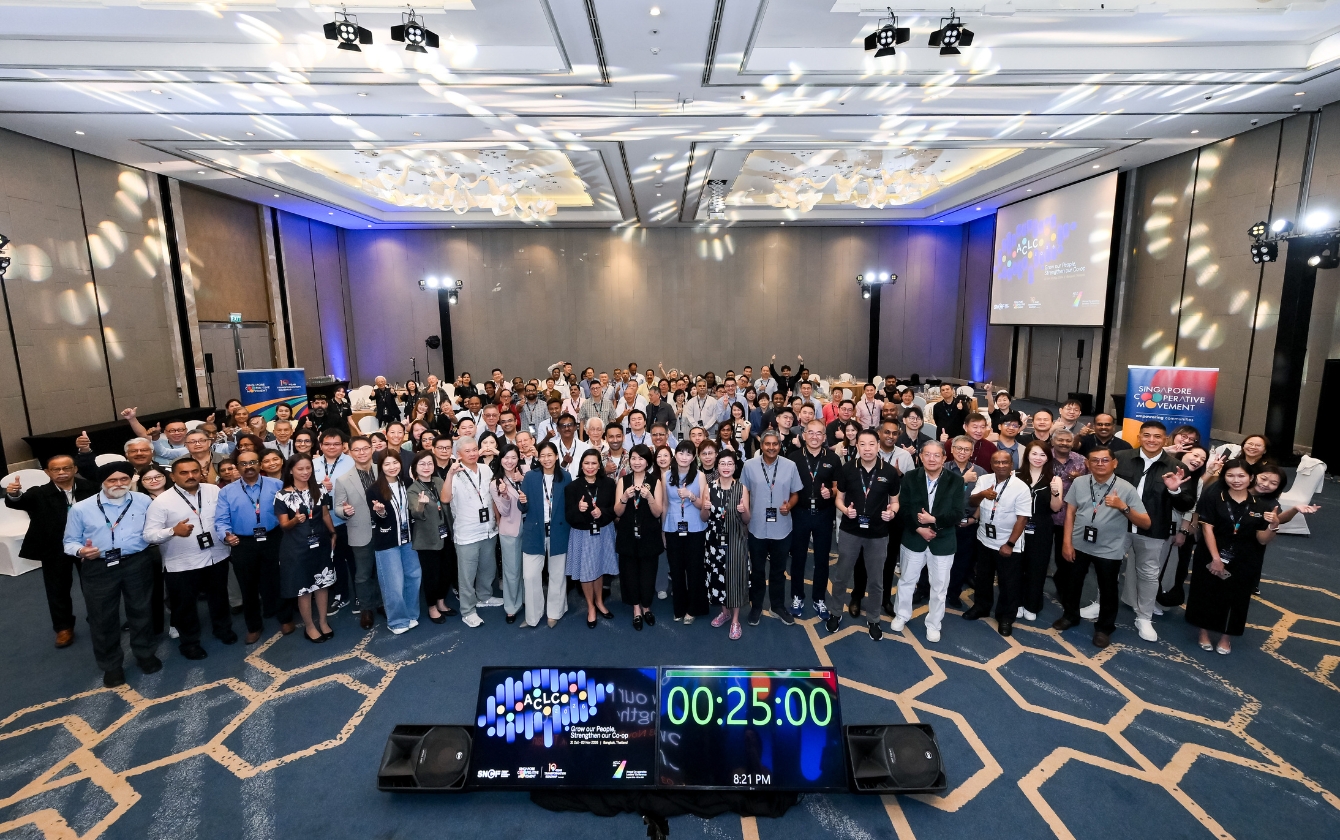
It was a recurring question at the Annual Co-operative Leaders' Conference (ACLC) 2026, held in Bangkok, Thailand, under the theme ‘Grow Our People, Strengthen Our Co-ops’.
"For me, leadership is not just about bringing new people on board. It is also about helping them grow, sharing what we know, and preparing them to lead," Mr Tng said.
As SNCF looks to implement its SCM 10-Year Transformation Roadmap, Mr Tng urged leaders to consider what they could do differently upon returning to Singapore. "What matters most is how we turn these plans into action," he said.
Stewards are not born but nurtured
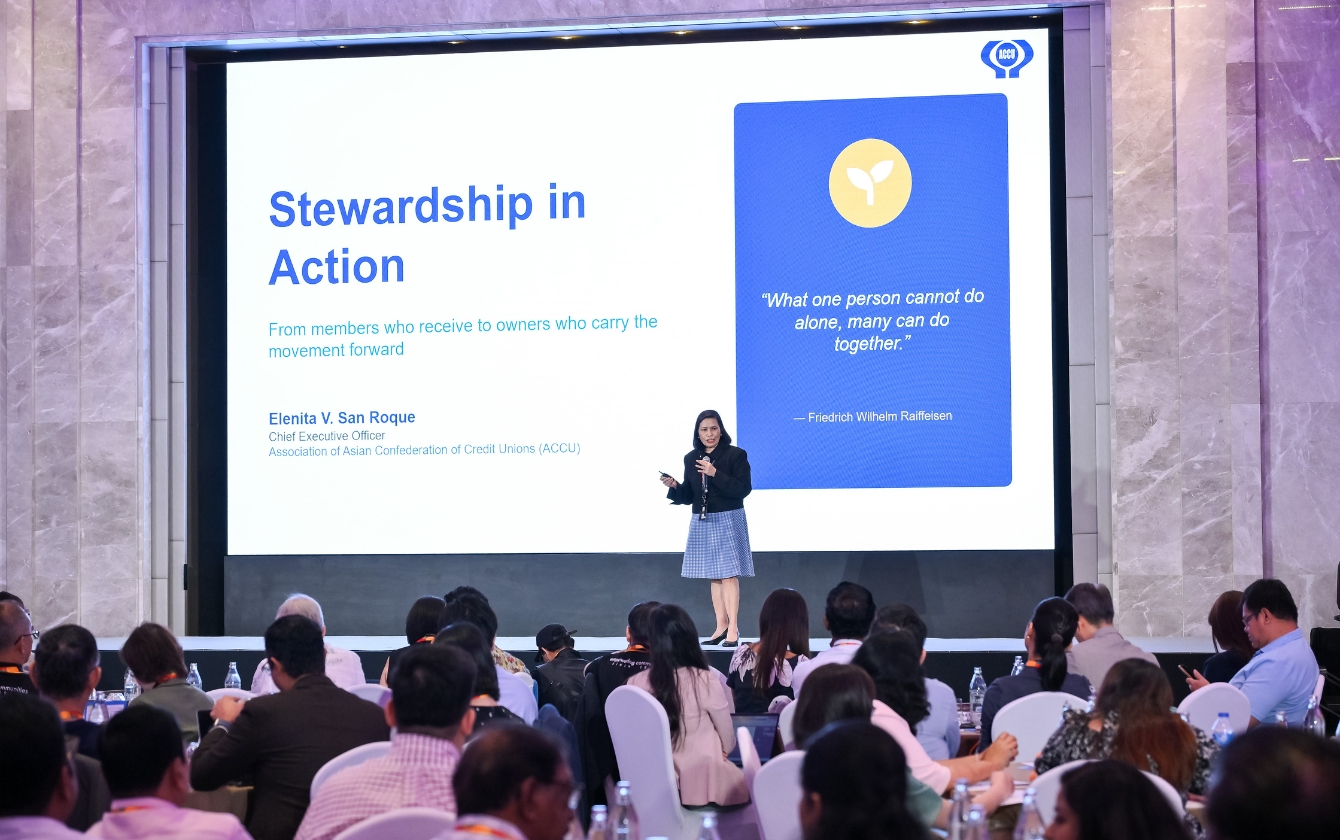
For Elenita San Roque, Chief Executive Officer of the Association of Asian Confederation of Credit Unions (ACCU), the challenge of keeping co-ops relevant begins with how members see their relationship with the organisation.
"Every co-op today is holding something that someone else built," she said. "The question for us: What will our members inherit from us?"
Co-ops were founded on the principle that people facing common problems could pool their resources and exercise collective control over the solutions.
Ms San Roque lauded Singapore's experience as an excellent case in point.
"Singapore co-ops did not wait for economic growth to solve social problems. They created co-ops to solve social problems, and in doing so contributed to economic growth," she said.
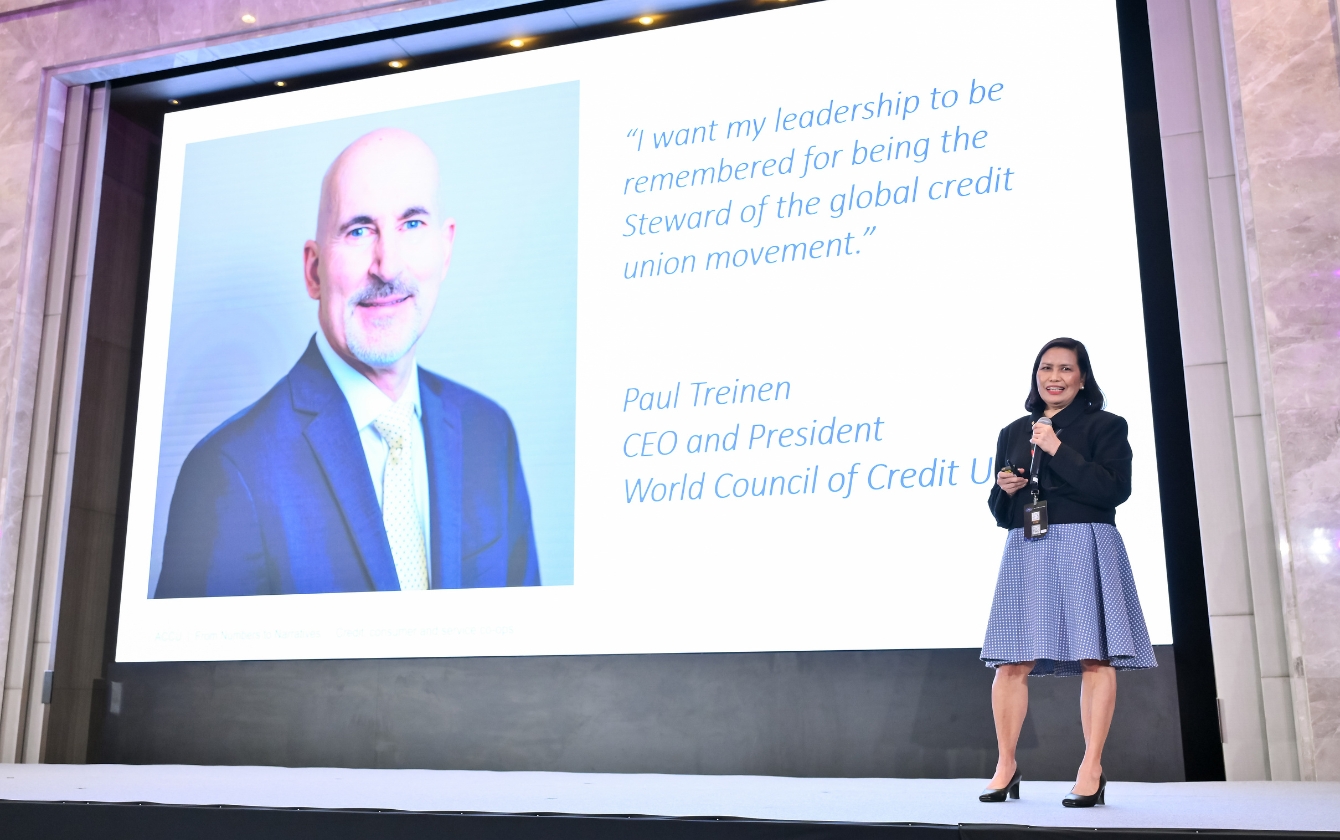
Ms San Roque also argued that co-ops risk losing their identity when members begin to see them merely as providers of products and services.
For instance, a credit co-op may attract members through competitive loan rates. But when another financial institution offers a better deal, there may be little reason for those members to stay.
Ms San Roque warned that a transactional relationship could leave members with little reason to remain involved in their co-op. She pointed to some uncomfortable warning signs: declining attendance at annual general meetings, the same few people making decisions year after year, and younger members leaving once their immediate needs have been met.
The challenge is to move members beyond asking "What do I get?" towards a greater sense of ownership and responsibility for their organisation's future. This means giving members opportunities to participate in decisions, contribute their skills and eventually take on leadership roles.
"Young members have the ideas. Do they have the keys to belong?" she shared.
She also encouraged leaders to start with practical measures, such as inviting young members to observe committee meetings or giving youth groups a small budget to undertake a project. "Stewards are not born. They are nurtured," she said.
Working with Youths
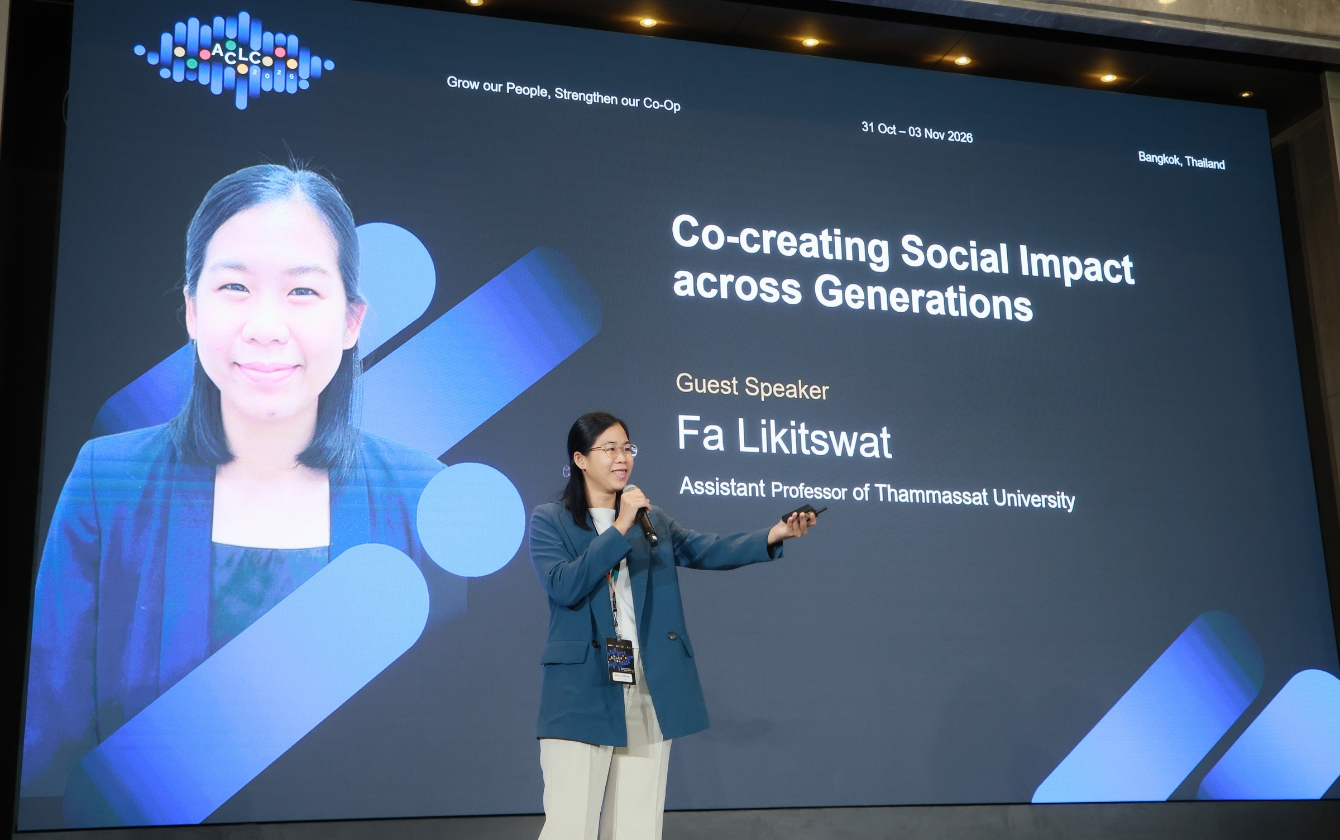
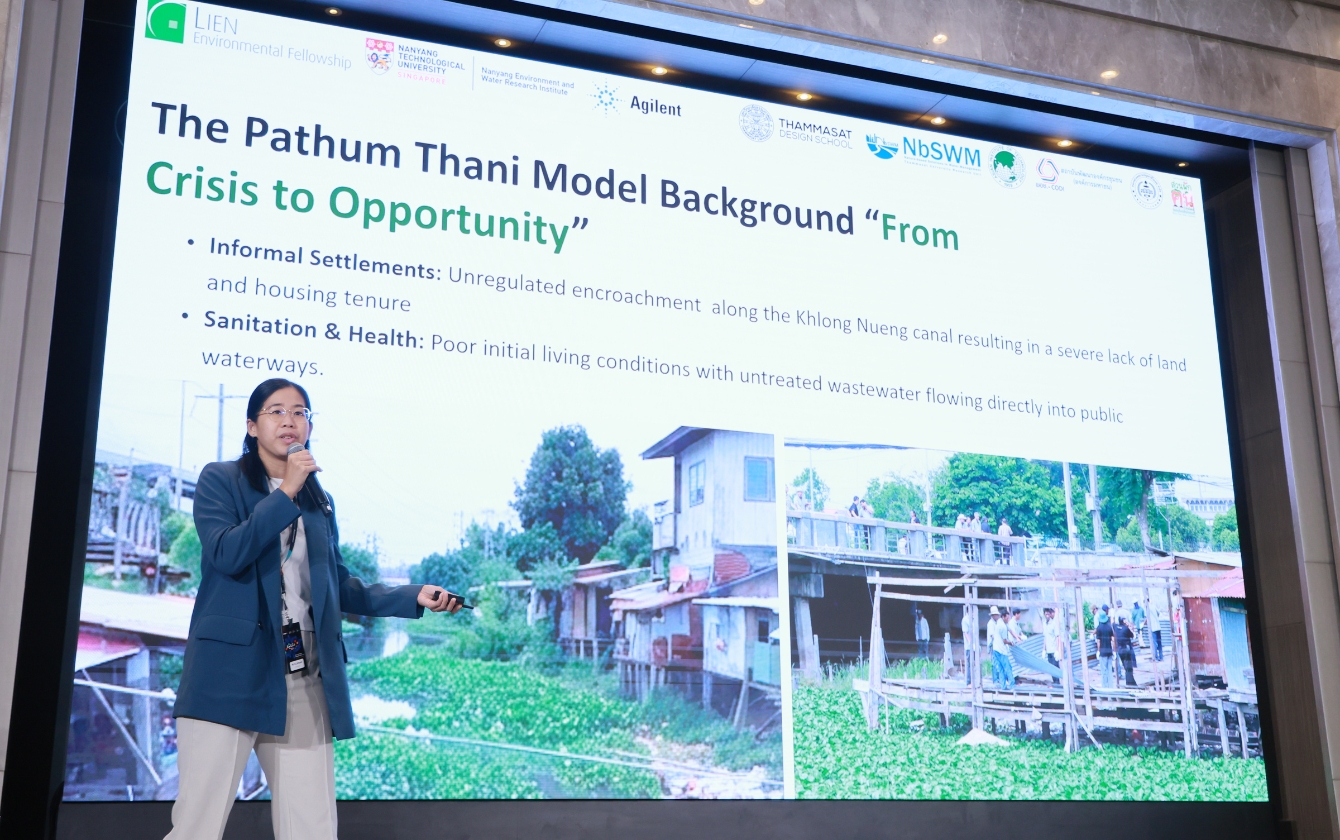
In Thailand's Pathum Thani province, the value of collective action can be seen in a rather unlikely place: a housing community that has been turning wastewater management into an opportunity to grow food.
Residents originally lived in informal settlements along the Khlong Nueng canal, where insecure housing tenure and poor sanitation were longstanding problems. Untreated wastewater flowed into public waterways.
Relocation into collective housing provided greater stability, but created another set of challenges. The new settlement occupied low-lying land vulnerable to flooding, while green spaces were scarce.
Assistant Professor Fa Likitswat from Thammasat University's Faculty of Architecture and Planning presented the Pathum Thani Agrihood Model, an initiative bringing residents, government agencies, researchers and university students together to tackle these problems.
A community co-op was established in 2016, followed by the construction of collective housing in 2018.
By 2023, the settlement had become a real-world design project for university students, who worked with residents to reimagine how its open spaces could be used.
The collaboration led to a system of greywater treatment, vertical green walls and community gardens where residents can cultivate vegetables for household consumption.
Surplus produce can also be shared or sold at local markets, creating potential livelihood opportunities.
According to the project team, 182 families directly benefit from the community gardens and flood-management measures, while 119 families participate directly in the greywater-treatment system and retention pond.
The project has added about 3,200 sq m of blue and green open space, with 135 types of plants grown across the site, including vegetables, herbs and fruit trees.
Its significance also lies in the way it was developed.
Rather than leaving the design entirely to technical experts, residents helped shape the improvements alongside students and researchers. The students gained practical experience, while the community contributed knowledge of the conditions it lives with every day.
The resulting gardens have also become spaces for learning about water treatment, food cultivation, and environmental management.
There are limits to what the project can achieve. “The area's low-lying geography means that nature-based solutions alone cannot eliminate its flooding problems,” said Asst Prof Likitswat.
Still, the experience offers a useful example for Singapore's co-ops.
Young people need not be passive beneficiaries of community programmes. With the right opportunities and partnerships, they can help develop solutions to problems that communities have lived with for years.
Mentorship is a virtuous cycle
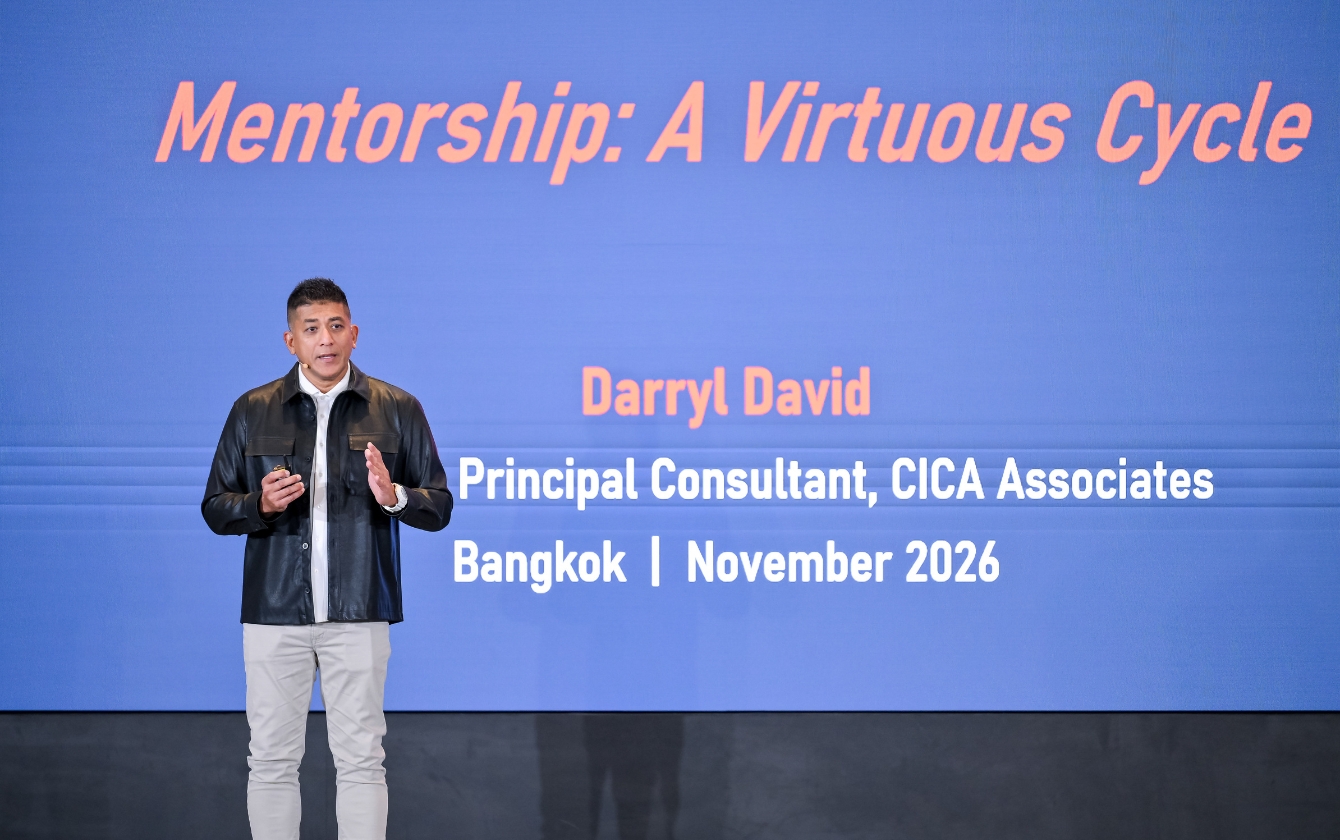
For all the enthusiasm surrounding younger leaders, there remains the question of what happens to the knowledge accumulated by those who came before them.
Darryl David, founder and principal consultant of CICA Associates, explored this in his presentation titled ‘Mentorship: A Virtuous Cycle’.
He said: “Mentorship should be a two-way exchange between generations.”
Experienced co-op leaders carry institutional knowledge, an understanding of their organisation's founding values and the lessons of navigating difficult decisions. Younger members bring different strengths, including digital fluency and new ways of communicating with communities.
The challenge is to create relationships in which these capabilities can be shared.
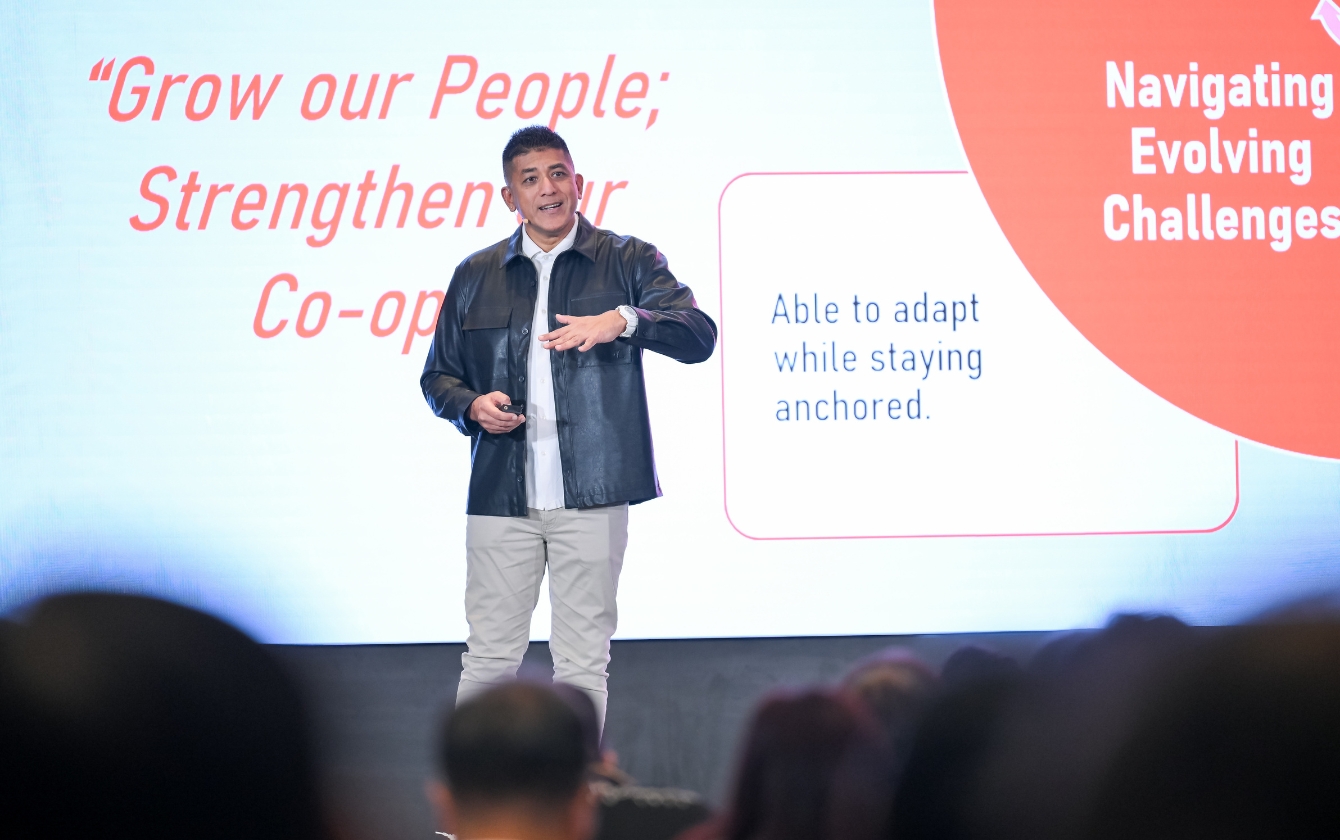
“Mentorship is a means of preserving a co-operative's identity while allowing it to adapt to changing circumstances,” said Mr David. He identified humility, openness, generosity, courage and empathy as qualities necessary for an effective mentoring relationship.
Such exchanges could become particularly important as co-ops prepare for leadership renewal, including succession planning and changes to the composition of their management committees.
Governance changes ahead
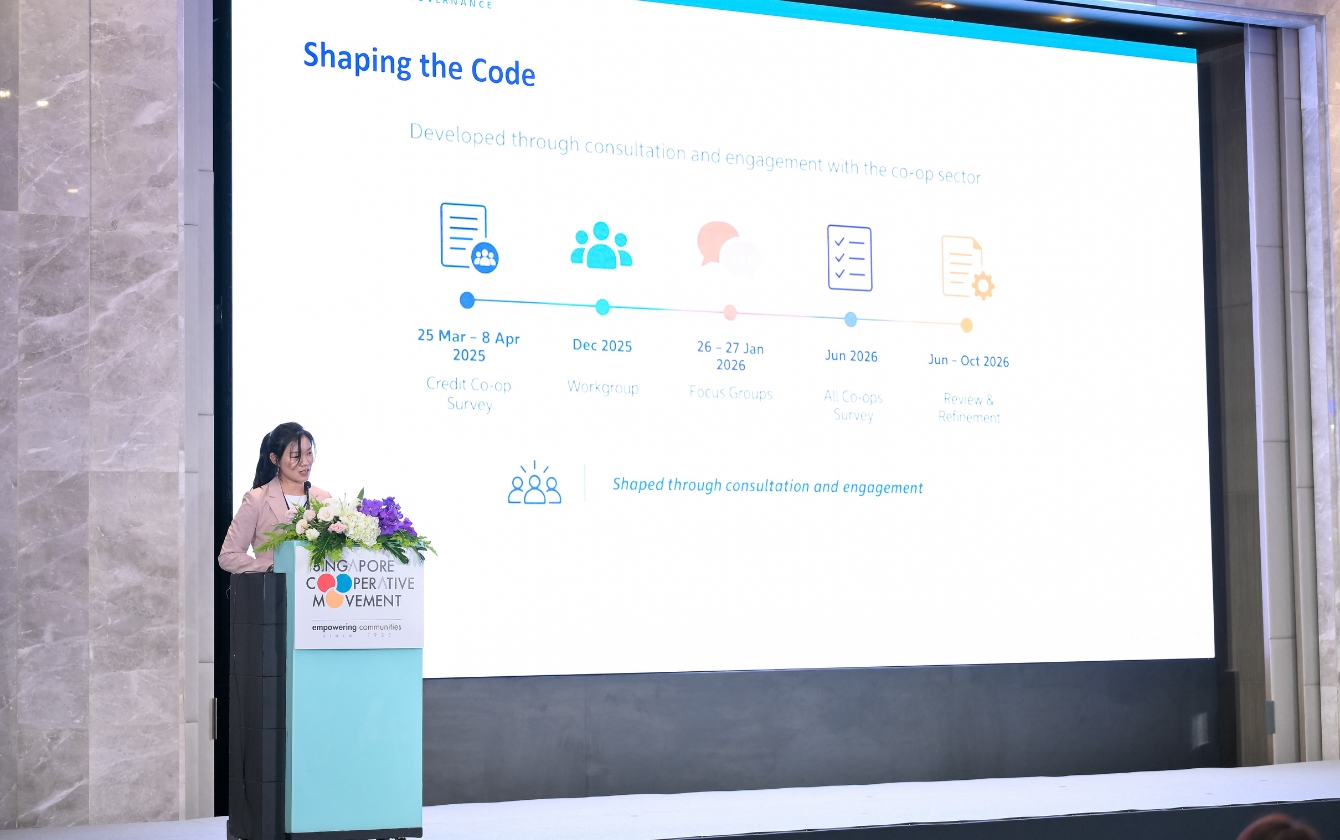
Meanwhile, Singapore's co-ops are preparing to enhance governance standards through the Code of Governance for Co-operative Societies.
At the conference, Melissa Swee from the Registry of Co-operative Societies (RCS) outlined proposed revisions to the Code of Governance for Co-operative Societies and sought further feedback from delegates.
The revised Code is intended to apply across Singapore's co-op sector, with governance reporting requirements adjusted according to the size and nature of each co-op.
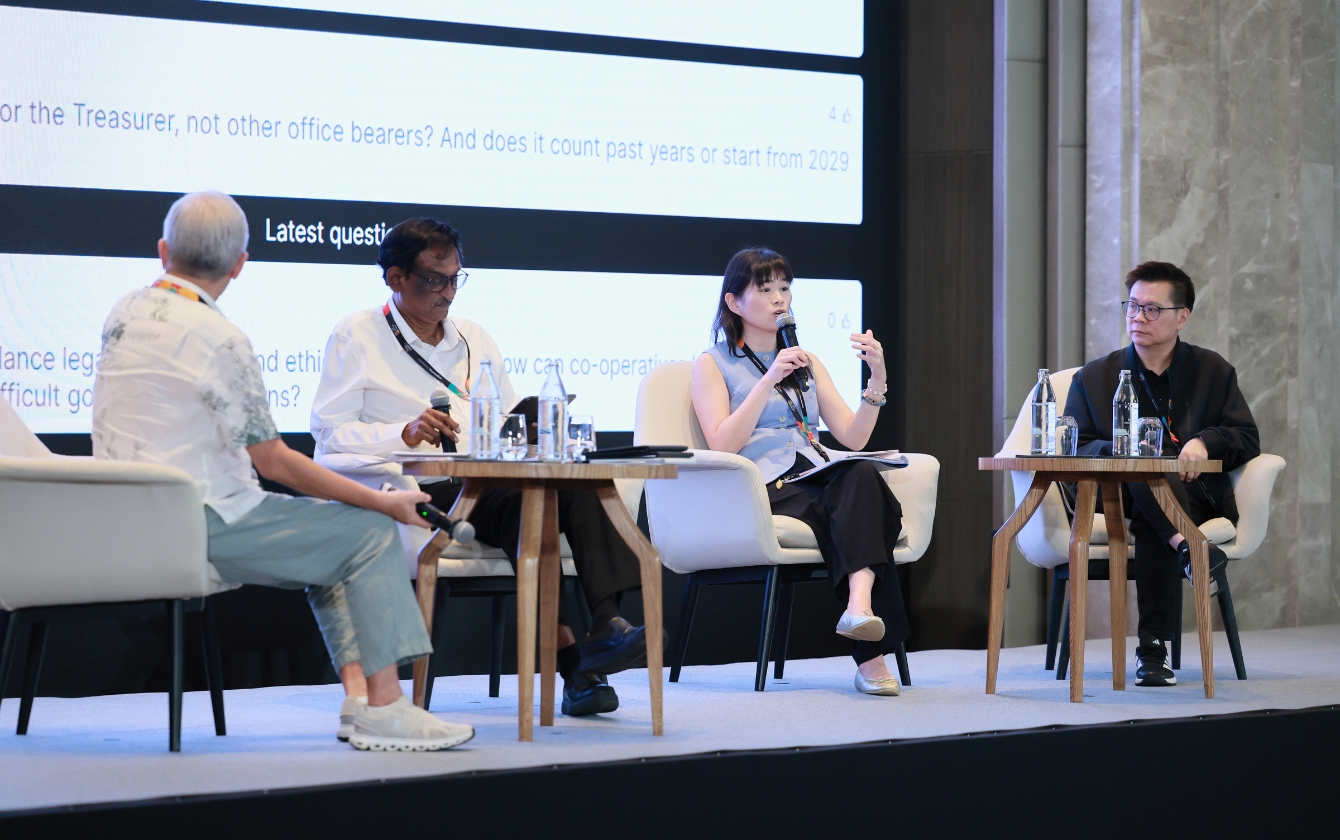
Co-ops called for greater flexibility in governance arrangements, particularly when it came to appointing independent committee members. Co-ops also shared challenges on succession planning and sought clarifications on the proposed term limits for Treasurers and Committee of Management.
Co-ops welcomed a phased approach by RCS to the rollout of the submission of the Governance Evaluation Checklist, given that different co-ops are at different stages of readiness for the revised Code.
For organisations that have spent decades building trust within their communities, the task ahead is to ensure that stronger governance and leadership renewal can sustain the work their predecessors started.
And as Mr Tng asked delegates to consider in his opening address: "What will we do differently when we return to Singapore?"
By Sng Ler Jun